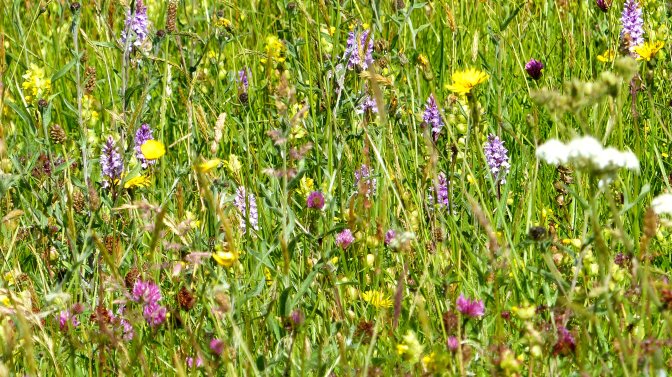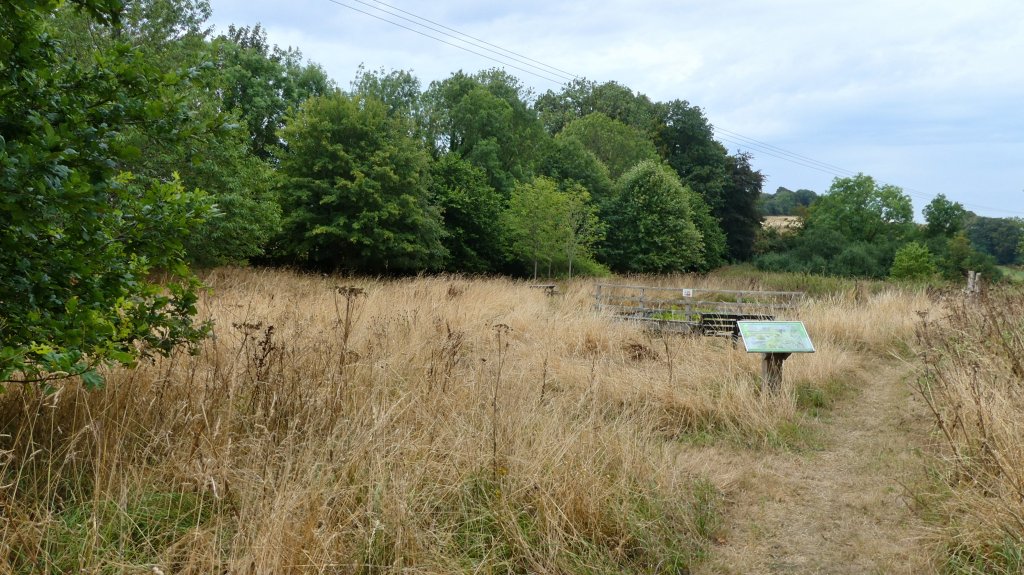
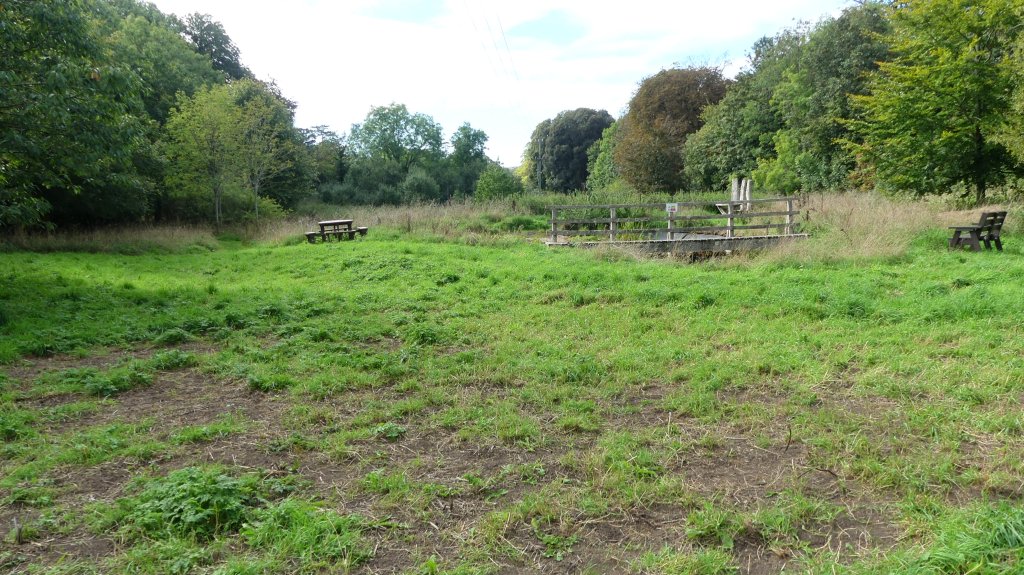
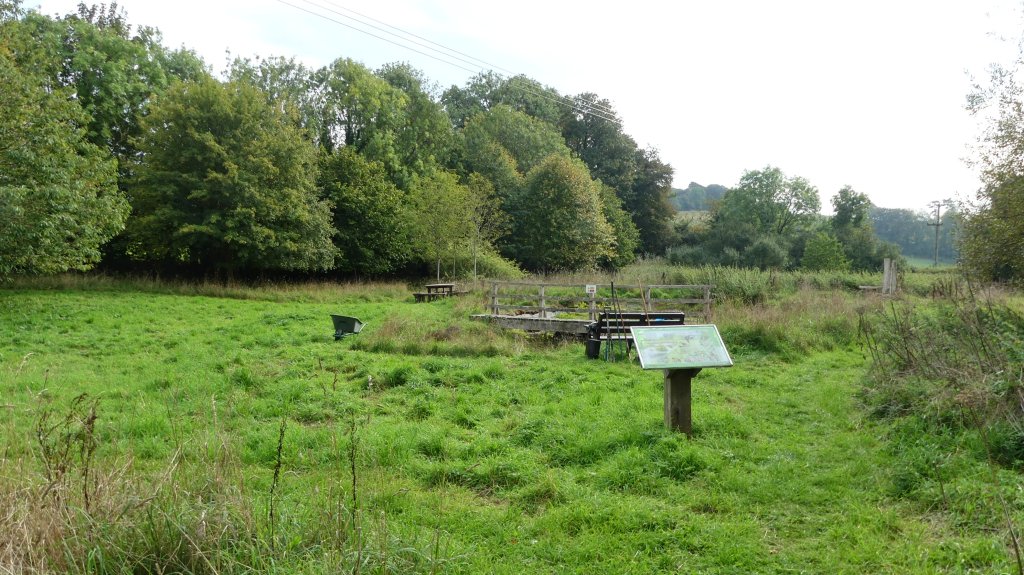
In the interest of providing for wildlife year-round and increasing biodiversity, we decided to convert an area of long grasses into a meadow with spring-flowering plants that would hopefully provide some nectar and pollen for insects early in the year.
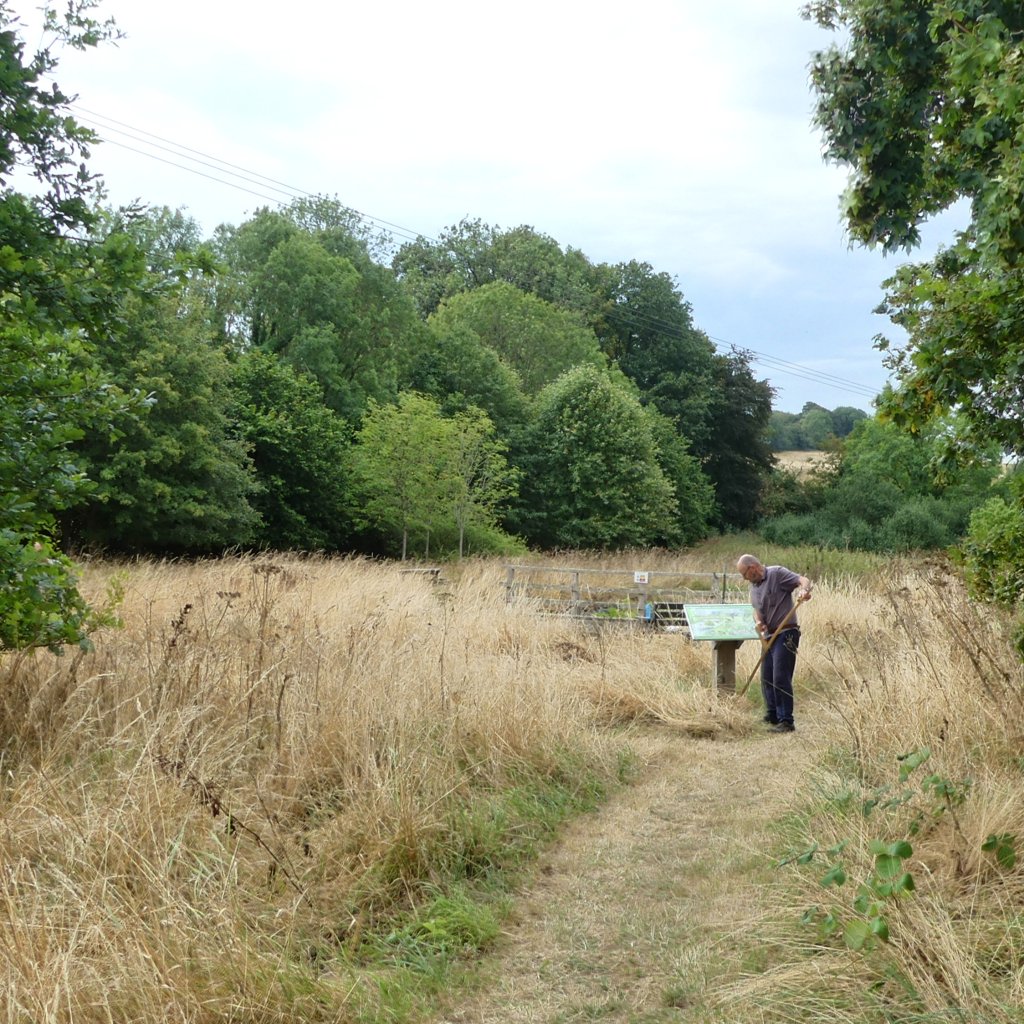
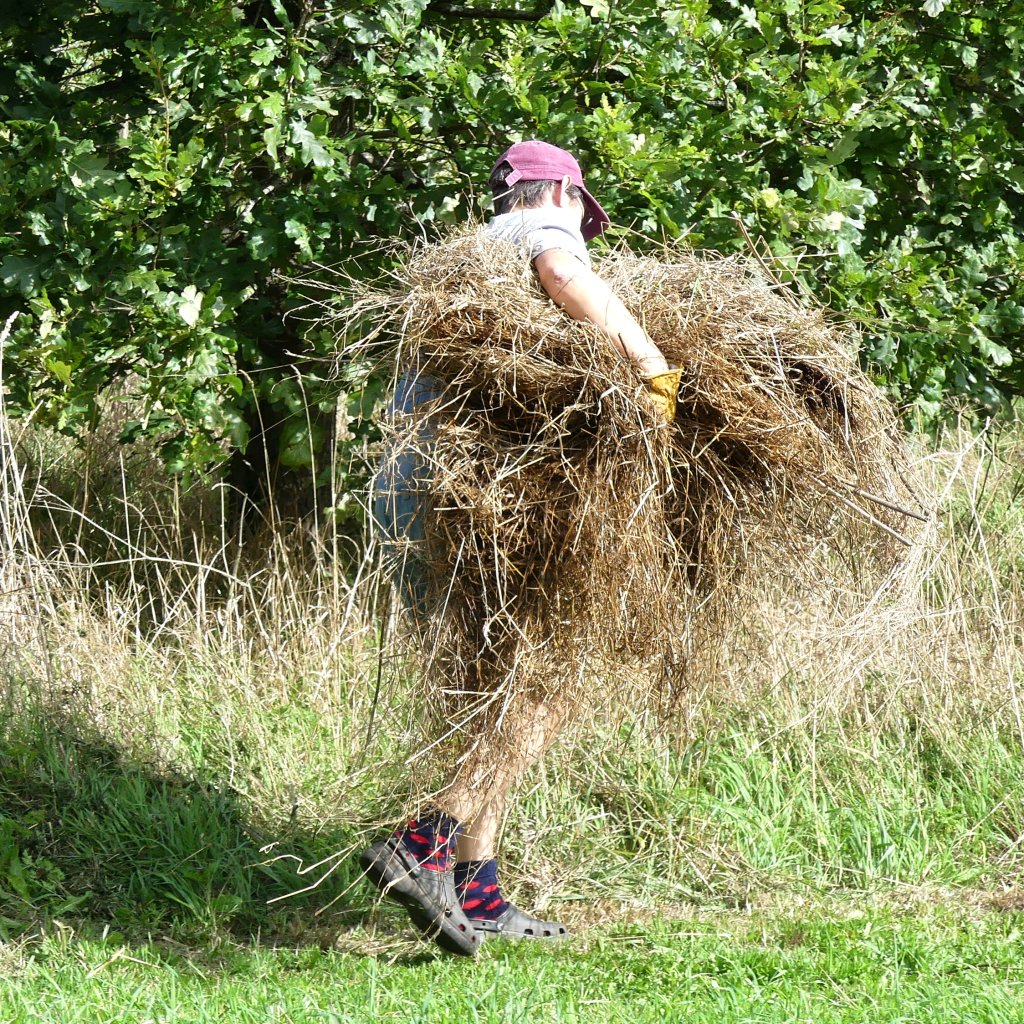
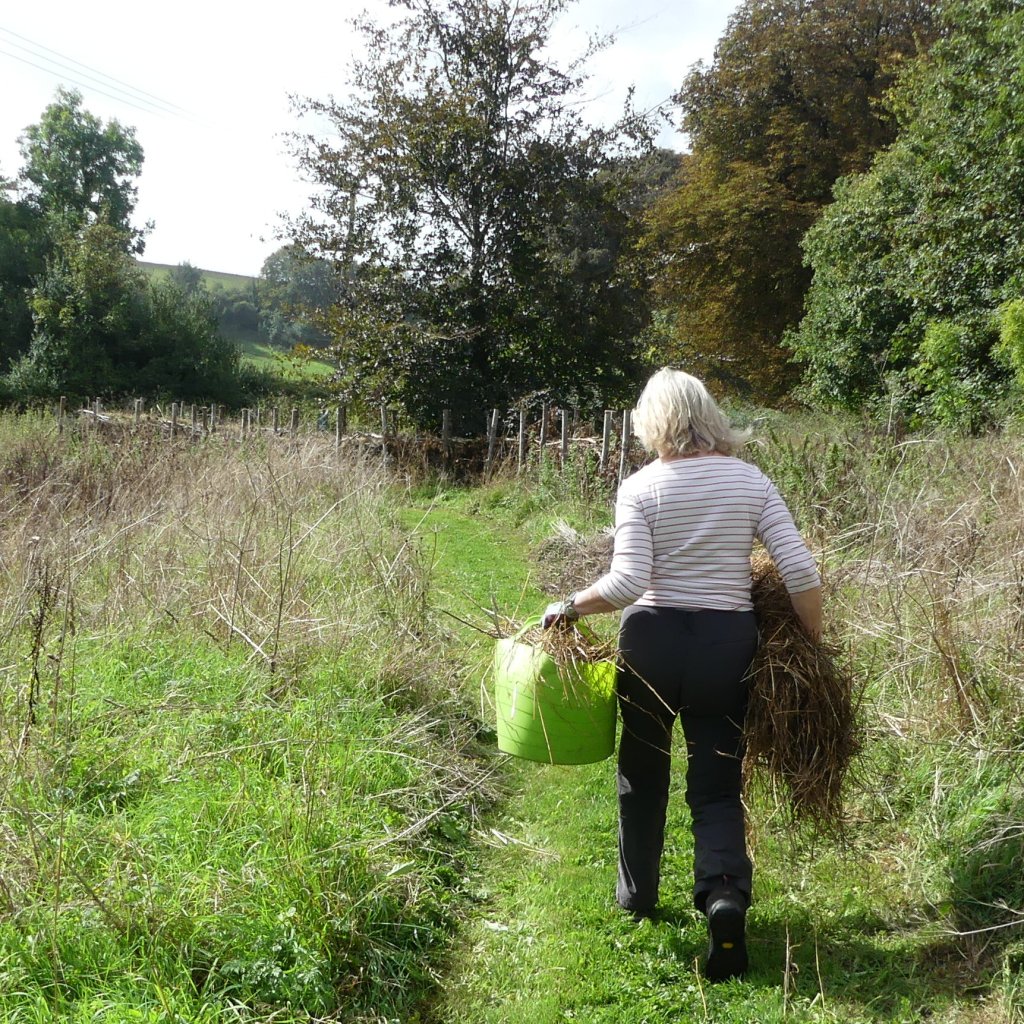
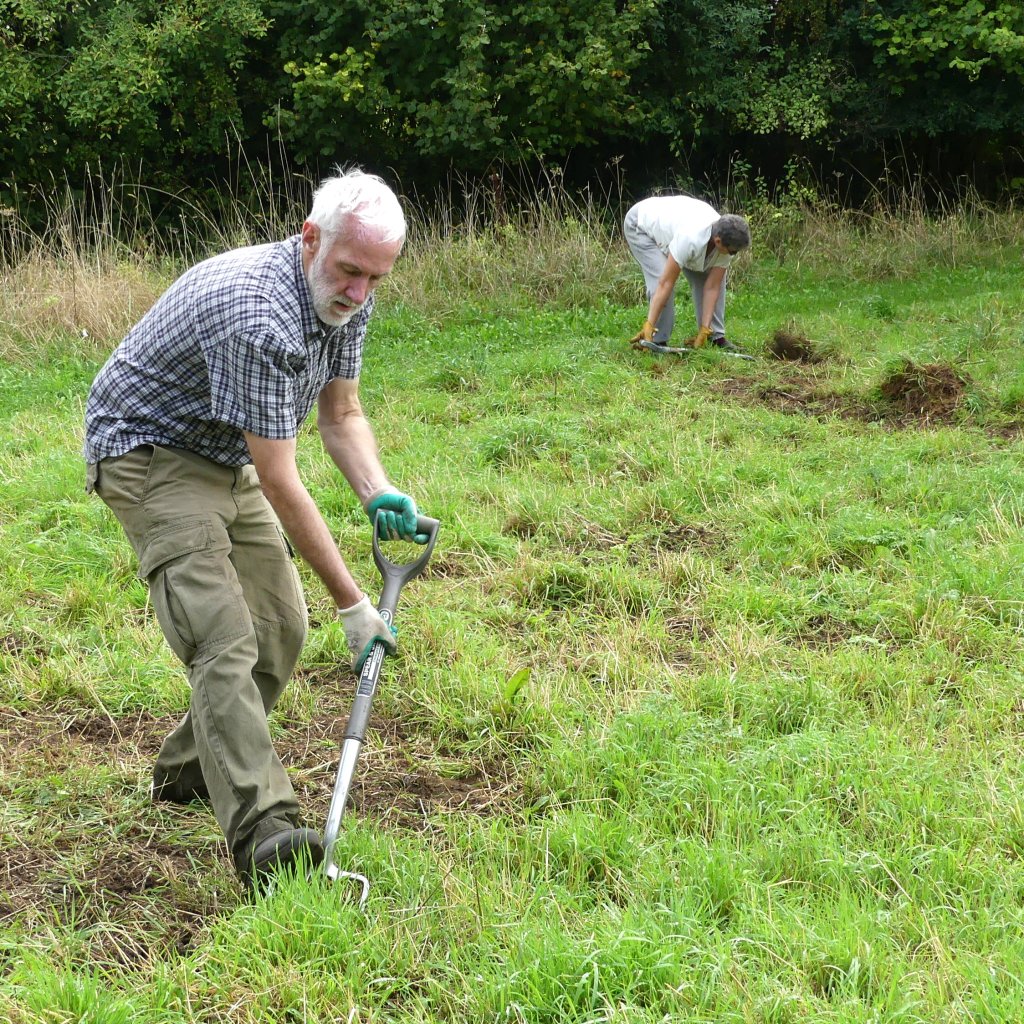
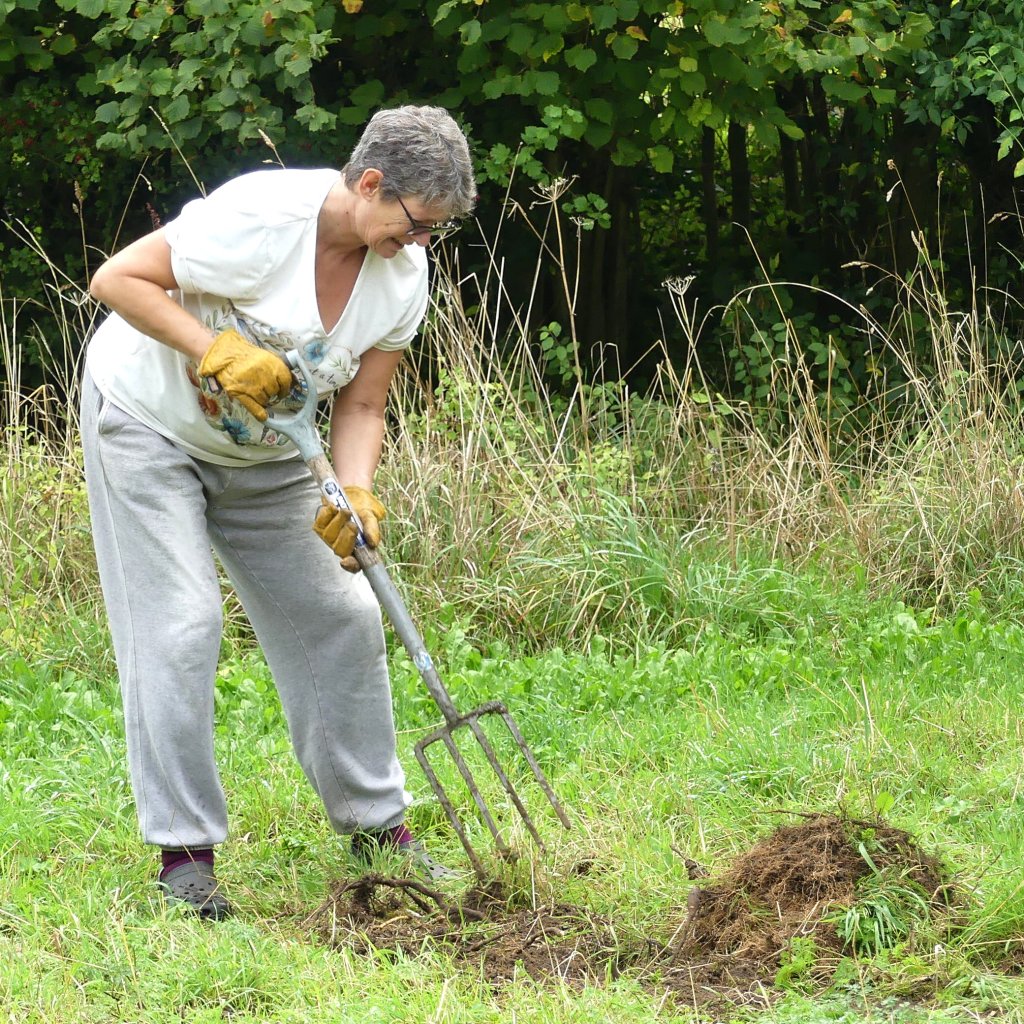
In late August we invited Chris Riley of Pratensis to scythe down the vegetation in Zone 5 to the north of the pond. Volunteers raked up the arisings and extended naturally occurring patches of earth by digging out clumps of taller-growing grasses.
The wetter but still warm weather over the following couple of months helped the seeds get started and we are hopeful there will be a good display of flowers greeting visitors as they enter the nature area next Spring, in addition to the vast natural carpets of cow parsley, dandelions, and celandines. The showing will be modest at first as it will take a while for the bulbs to establish and for the perennials to flower.
This new Spring Meadow area (Zone 5) will be cut low every year at the end of summer when all the seeds have dropped. This will encourage a better growth of the smaller wildflowers and control the tall grasses that compete with them for space and nutrients.
[This strategy is in contrast to the other wildflower area (Zone 3) to the south of the pond where the blooms open later and flower throughout the summer. The stems and seedheads are allowed to remain standing throughout the winter as food and shelter for a wide range of wildlife. Here, the area will have a controlled cut-back, with one third of the area being scythed each year in late winter or early spring on a rotational basis, to conserve the habitat and all its occupants who need to overwinter in safety. The bank of nettles next to the pond will be the portion to be scythed next, when any insect pupae will have already emerged.]
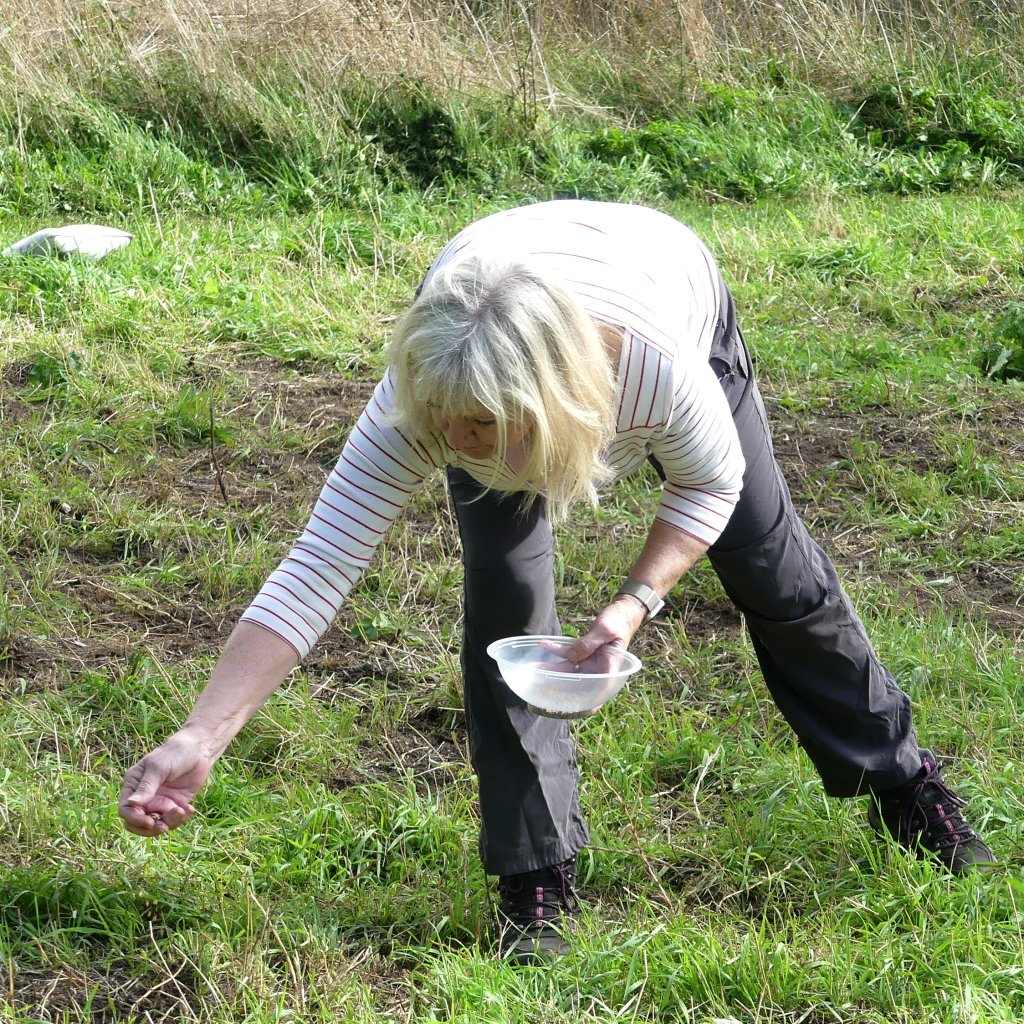
The bare earth areas in Zone 5 were sown with a mixture of 34 different species of Spring-flowering annuals and perennials and those suitable for dry soils, including yellow rattle (the “meadow-maker”). The seeds purchased from Naturescape included:
| SPRING MEADOW FLOWERS | |
| Latin Name | Common Name |
| Achillea millefolium | Yarrow |
| Agrimonia eupatoria | Common Agrimony |
| Anthyllis vulneraria | Kidney Vetch |
| Centauria nigra | Common Knapweed |
| Centauria scabiosa | Greater Knapweed |
| Conopodium majus | Pignut |
| Daucus carota | Wild carrot |
| Echium vulgare | Viper’s Bugloss |
| Fritillaria meleagris | Snakeshead Fritillary |
| Galium verum | Lady’s Bedstraw |
| Geranium pratense | Meadow Cranesbill |
| Hieracium maculatum | Spotted Hawkweed |
| Hypochaeris radicata | Common Catsear |
| Knautia arvensis | Field Scabious |
| Leontodon hispidus | Rough Hawkbit |
| Leucanthemum vulgare | Oxeye Daisy |
| Linaria vulgaris | Common Toadflax |
| Lotus corniculatus | Bird’s-foot Trefoil |
| Lychnis flos-cuculi | Ragged Robin |
| Malva moschata | Musk Mallow |
| Narcissus pseudonarcissus | Wild Daffodil |
| Plantago media | Hoary Plantain |
| Primula veris | Cowslip |
| Prunella vulgaris | Self Heal |
| Ranunculus acris | Meadow Buttercup |
| Ranunculus bulbosus | Bulbous Buttercup |
| Reseda luteola | Weld |
| Rhinanthus minor | Yellow Rattle |
| Rumex acetosa | Common Sorrel |
| Sanguisorba minor | Salad Burnet |
| Silene dioica | Red Campion |
| Silene vulgaris | Bladder Campion |
| Trifolium pratense | Wild Red Clover |
| Verbascum nigrum | Dark Mullein |