
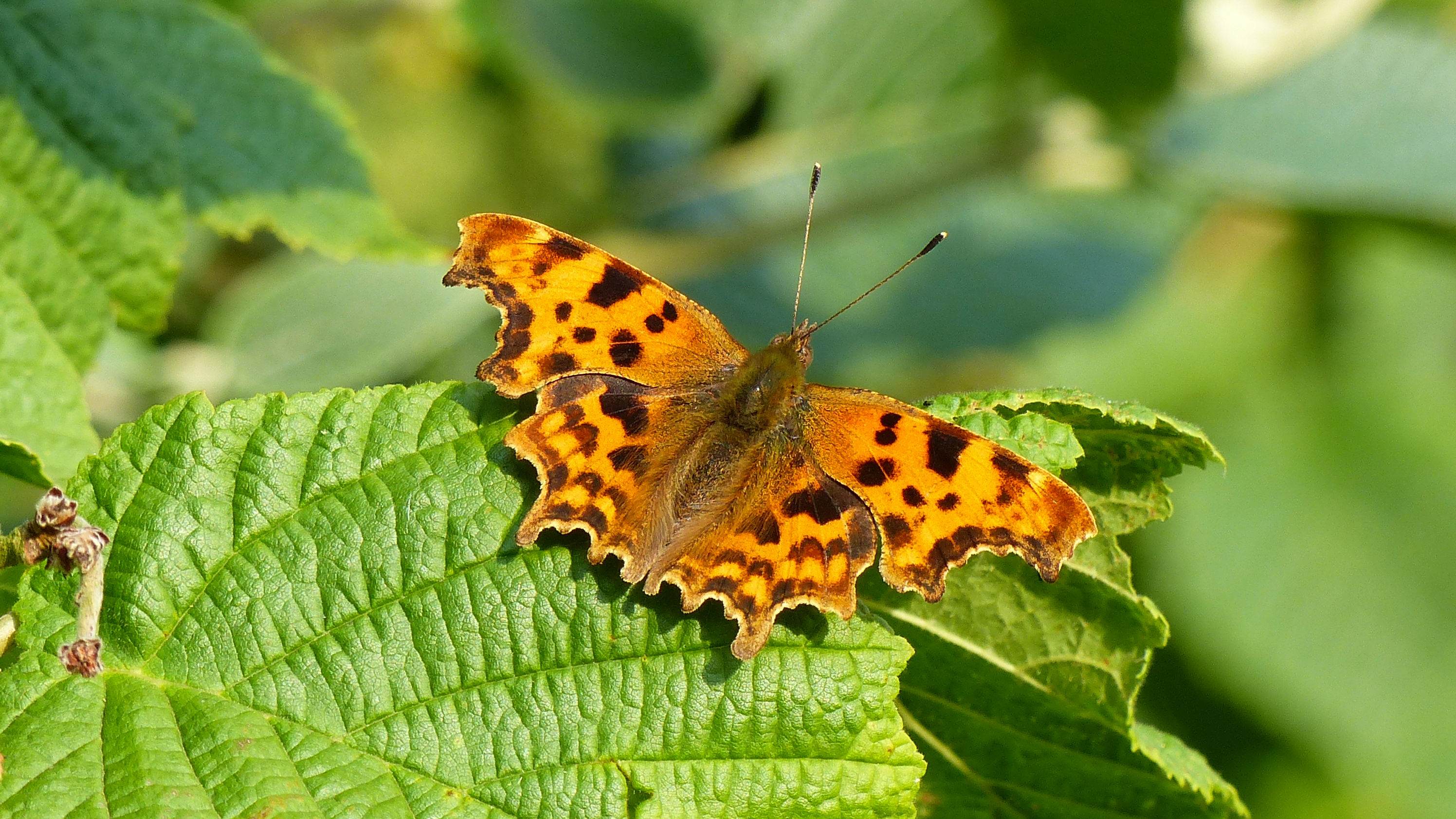


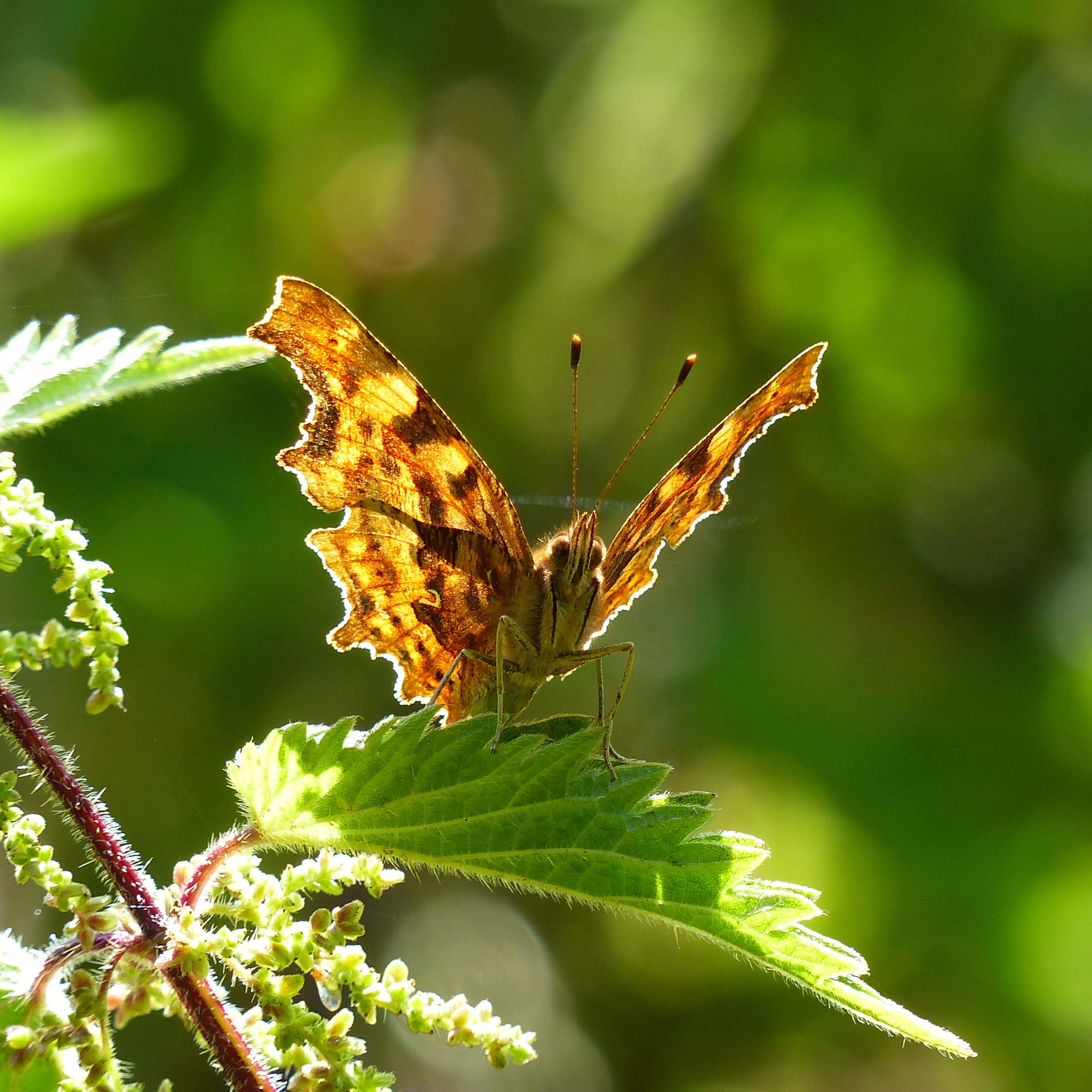
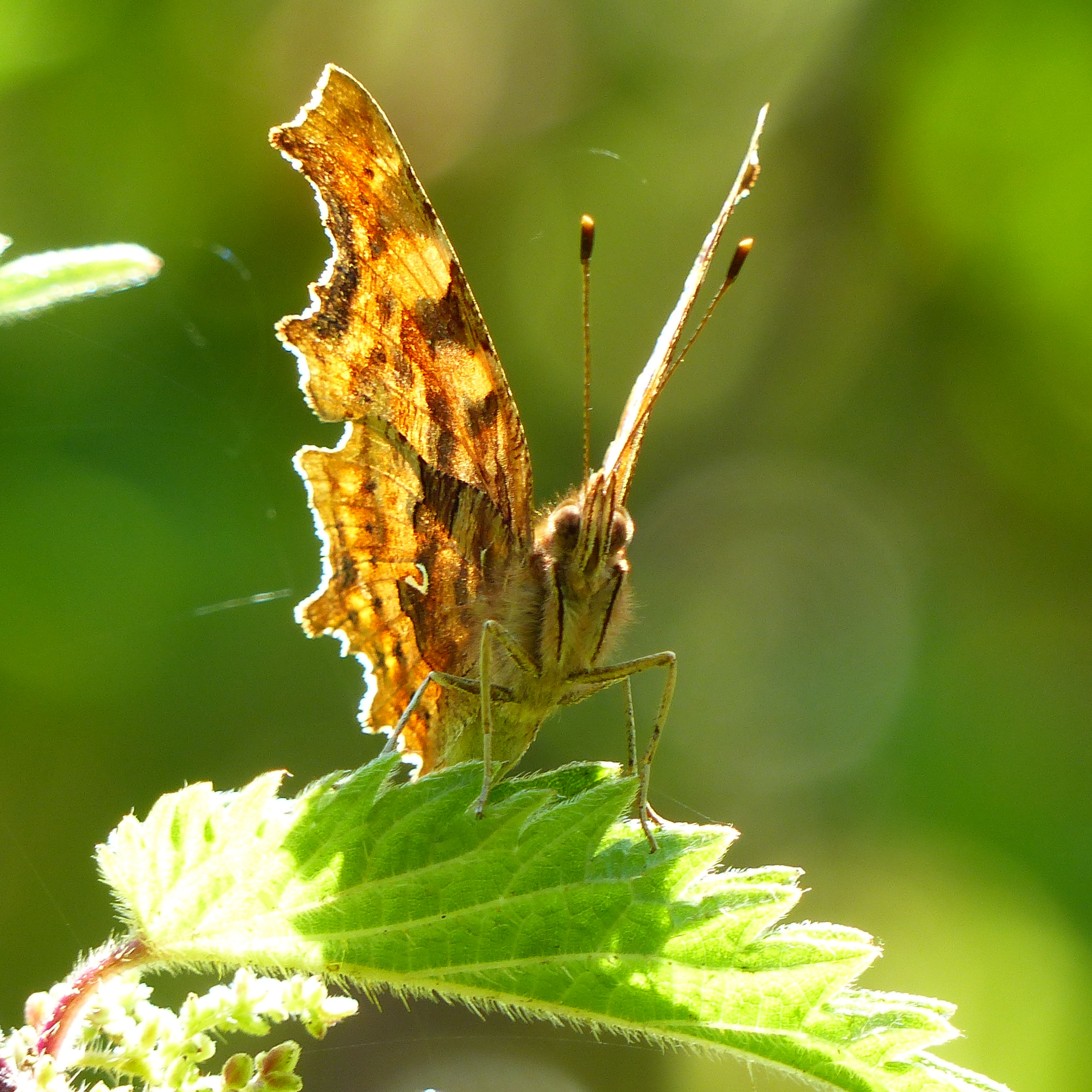


Comma butterfly (Polygonia c-album) imago.
One of the 37 types of butterfly and moth (Lepidoptera) that have been recorded in Charlton Down Nature Area so far.
Useful Books and Links
Collin’s Complete Guide to British Butterflies and Moths, a photographic guide to every common species, Paul Sterry, Andrew Cleave, and Rob Read, 2016, Harper Collins, ISBN 970-0-00-810611-9.
https://butterfly-conservation.org/butterflies/comma
https://www.woodlandtrust.org.uk/trees-woods-and-wildlife/animals/butterflies/comma/
Discover more from Charlton Down Nature Area
Subscribe to get the latest posts sent to your email.

 Charlton Down Nature Area
Beautiful, Jessica! You have been showing some really interesting photographs of insects lately.
LikeLiked by 1 person
One of the aims with this new website is to publish an inventory of everything that lives in the Charlton Down Nature Area, in a way that will be searchable by anyone visiting the site. There will eventually be QR codes displayed at the site so that visitors can tap straight into the website with their mobile phones and find out more information about the plants, animals, history and geography of the CDNA together with nature trail ideas, upcoming events, and news updates. Many of these photographs were taken last year or even earlier, and it is an ongoing activity. I visit every day possible looking for new species for the list. So far I have recorded 166 different kinds of insect and arthropod, with a running total of 340 different plants and animals to date.
LikeLike
An “inventory of everything that lives in the Charlton Down Nature Area” strikes me as a prodigious task. And it looks like you are well on your way to finishing it. Hard to believe you have 166 kinds of insects and arthropods on the property. Before you started your tally, did you think there would be so many? And 340 kinds of plants and animals? Amazing! And then there is the wonder of you, who are doing so much to bring about this project. I applaud you.
LikeLiked by 1 person
Thank you for your support, Linda. I expect that there would be a doubling up of the number of species if I were to discover all the small, hidden, or transient creatures in the pond, soil, and undergrowth in daytime and at night. I need to employ a sweep net in the vegetation, pitfall traps for ground dwelling invertebrates, a Longworth trap for live-capture of small mammals, a pond net for the water beasties, a light trap for moths and other night-flying insects, and someone knowledgeable and patient to name all the birds. Oh, and find secure places to set up trail cameras. I think maybe there is a long way to go yet before we get a near-complete list of species.
LikeLiked by 1 person