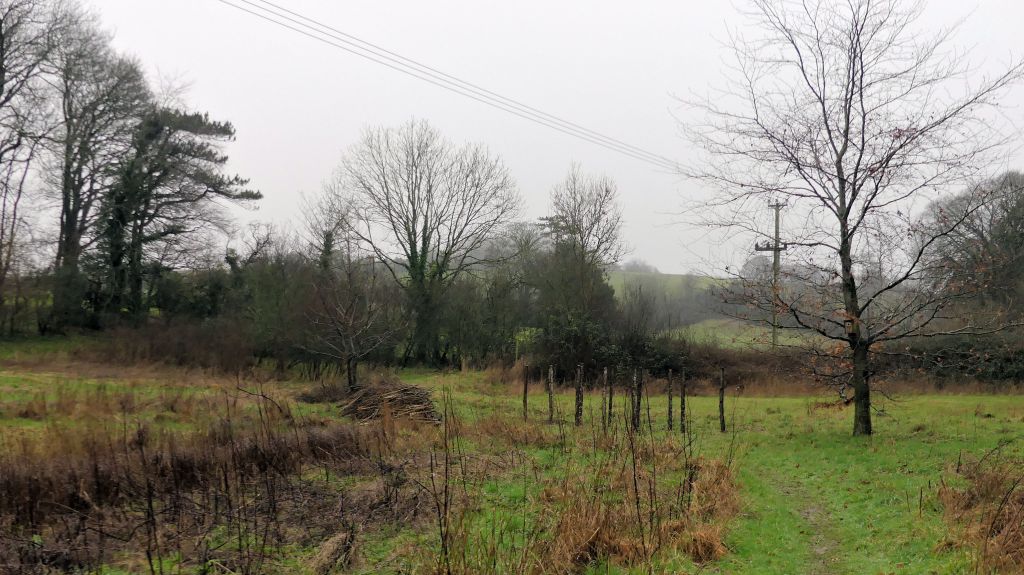
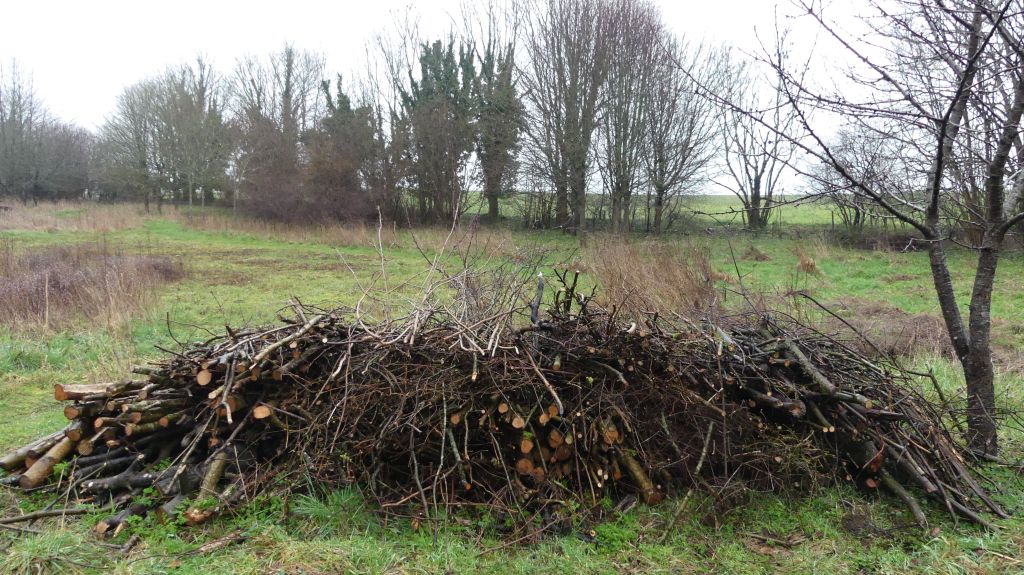
What is a dead hedge? It is a constructed habitat for all kinds of wildlife, a barrier or protective structure, and a useful means of recycling waste material generated from maintenance activities in a nature area, park or garden. It is the ultimate “Bug Hotel” providing many niches for insect and invertebrate occupation. More than that, it can also be used by birds and small mammals for nesting and shelter. The cut branches, twigs and leaves used for infill provide ideal conditions for fungi, mosses and lichen to thrive, and these slowly aid decomposition so that the infill settles over time – rather like a compost heap – allowing the hedge to be topped up with fresh material.
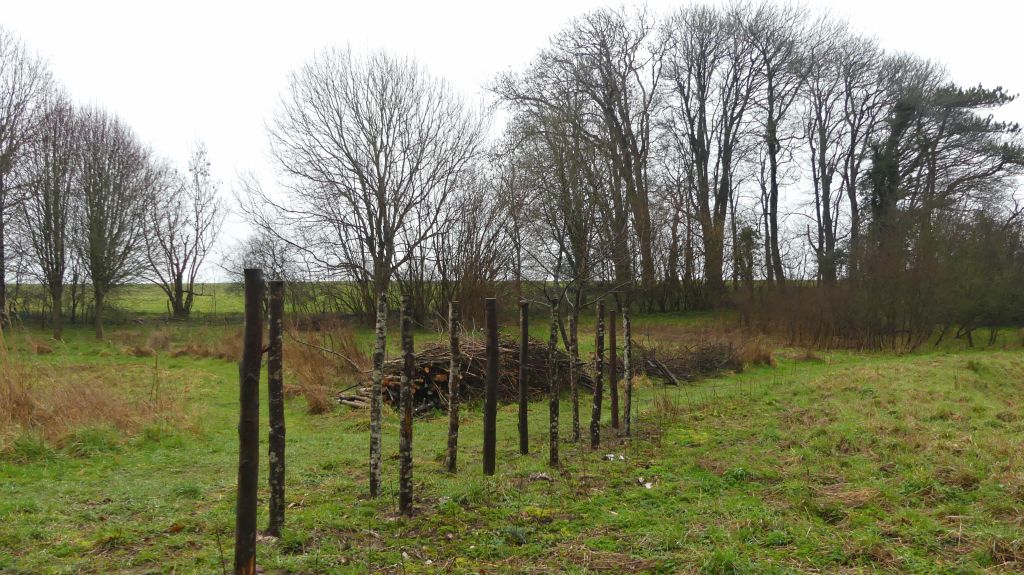
What does it look like? Dead hedges are almost as variable as the people who build them. Height and width are optional depending on the purpose they will serve in a particular context. All of them have in common two parallel rows of fence posts separated by a space of anything from 0.3 to 1.5 metres. In the gap between the rows of posts, dry dead plant material is stacked. It can be as orderly or as chaotic as the builders choose. It is possible to use imagination and be creative about the details. Holes might be drilled in larger logs for use by solitary bees. Old air bricks might fulfil a similar function. Stacks of hollow bamboo canes and accumulations of pine cones can be added, for example. The greater the variety of materials the more successful it will be as a habitat to increase abundance of wildlife and increase biodiversity in the location.
Where to build it? We are building ours along the boundary between the Swale and the Nature Area in Charlton Down. The hedging whips donated and planted along the boundary by Meadfleet (who are responsible for maintenance of the Swale), and which replace the dilapidated barbed wire boundary fence, are not protected from damage by foraging animals or trampling because of the extra cost involved in using stakes and protective tubes. It is estimated that it will take 10 years perhaps before they will grow sufficiently into a living hedge of any height, meanwhile leaving an open view and open access between the two sites.
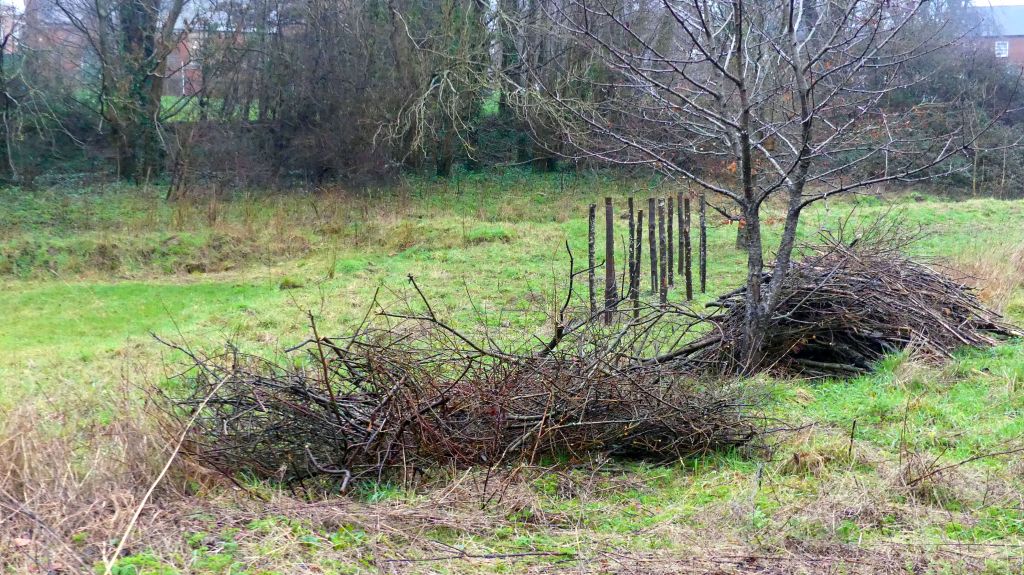
Starting with a short trial stretch at the point of access between the two areas, our dead hedge will in part protect the developing live hedge and also visibly demarcate the boundary line. The access point from Nature Area to Swale, via which contractors can bring in motorised equipment for periodically clearing the channel and culverts, will be nigh hidden from the view of visitors entering the Nature Area by overlapping panels of dead hedging. When the whole length of dead hedging is complete, the passageway between the two areas will only be visible when people walk back to the main gate from the bottom of the site. The gap in the dead hedging also allows deer and other larger mammals like fox and badger to cross freely between the two sites – as they currently do.
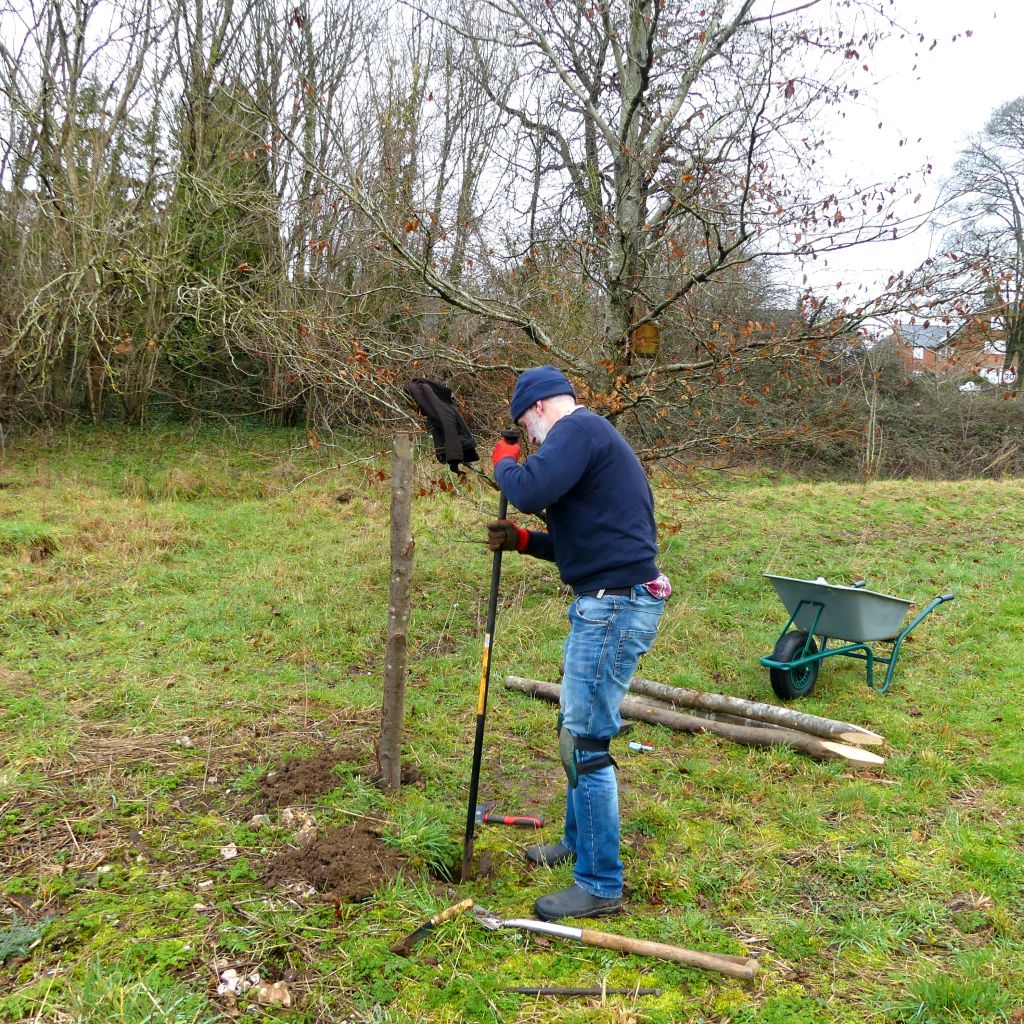
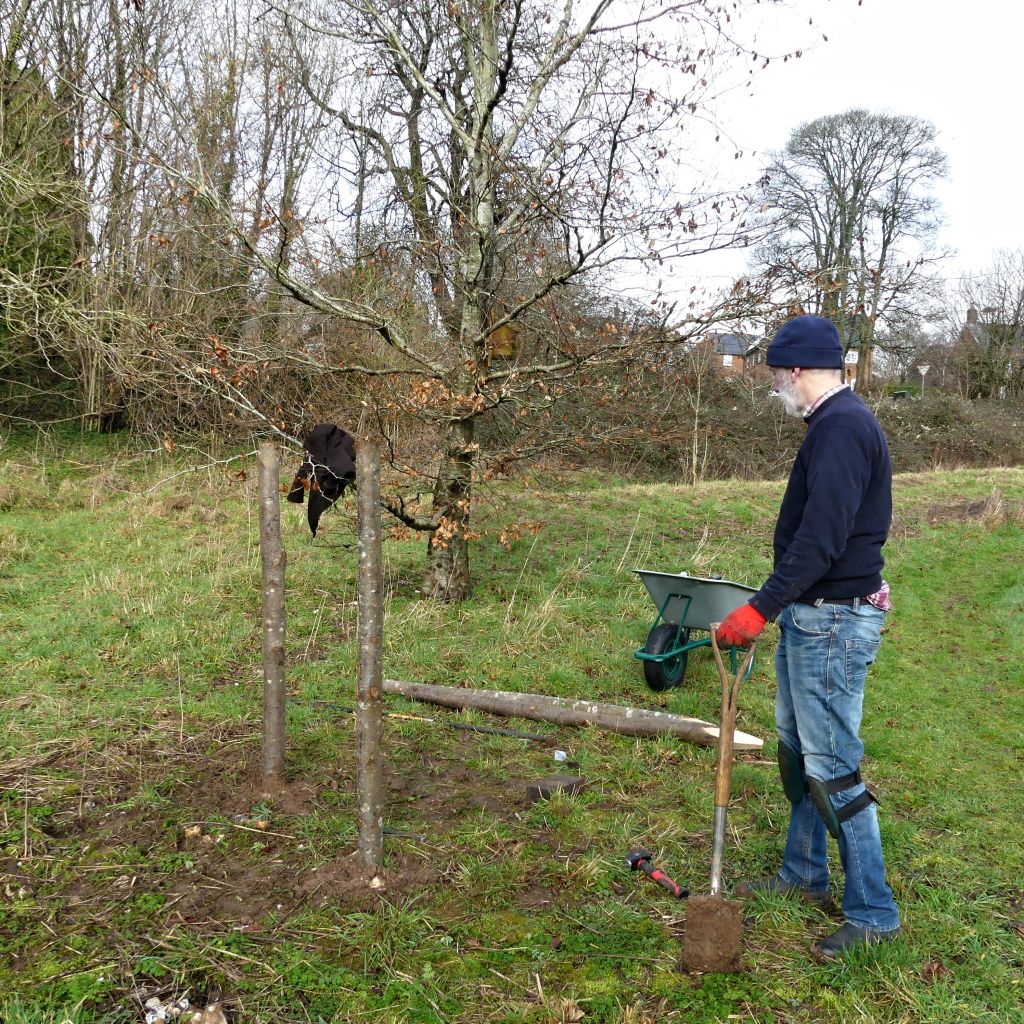
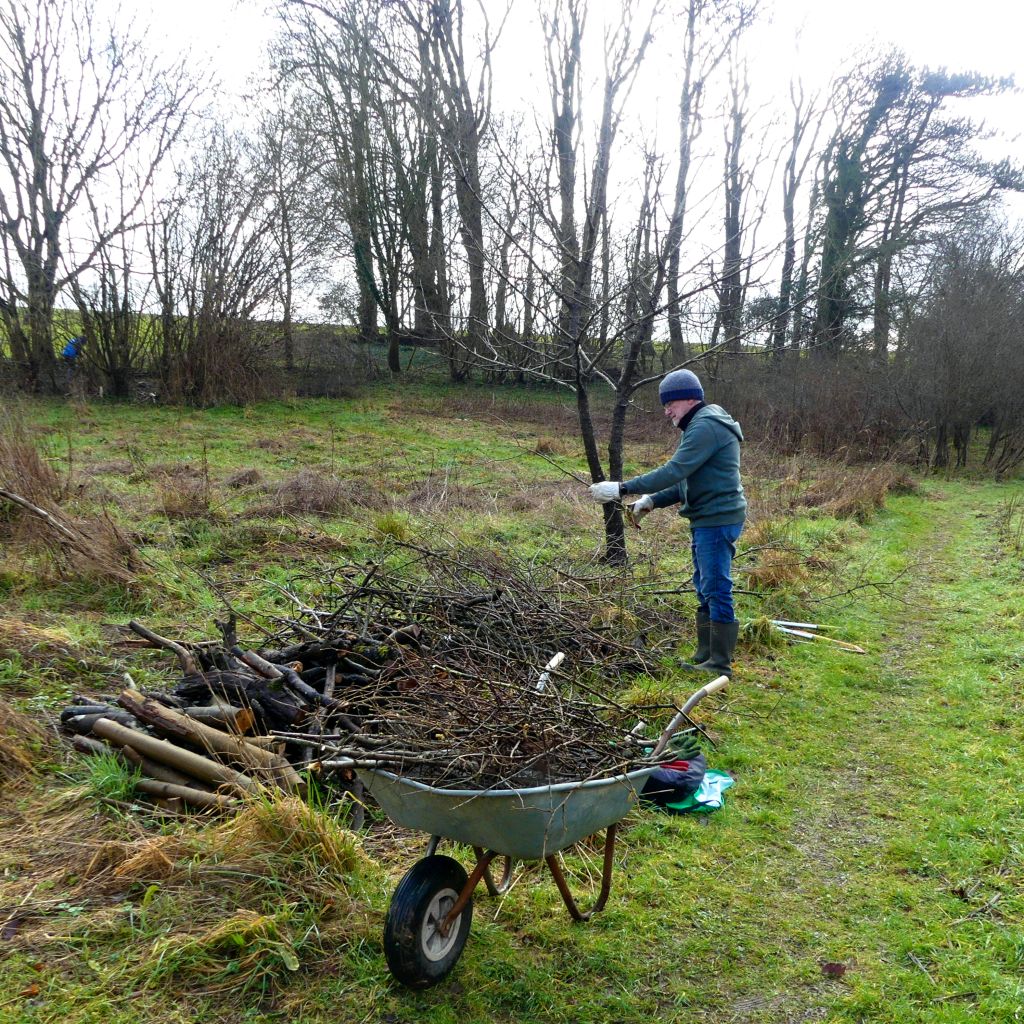
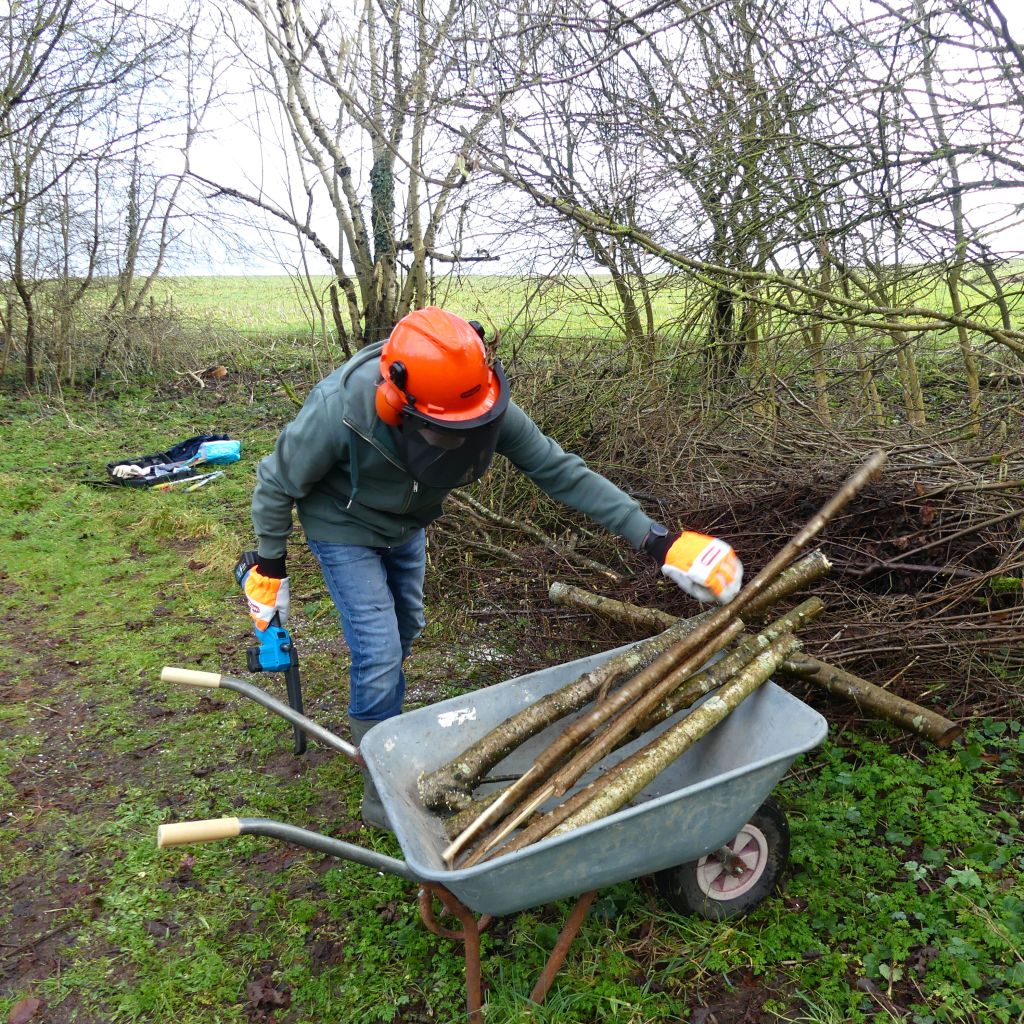
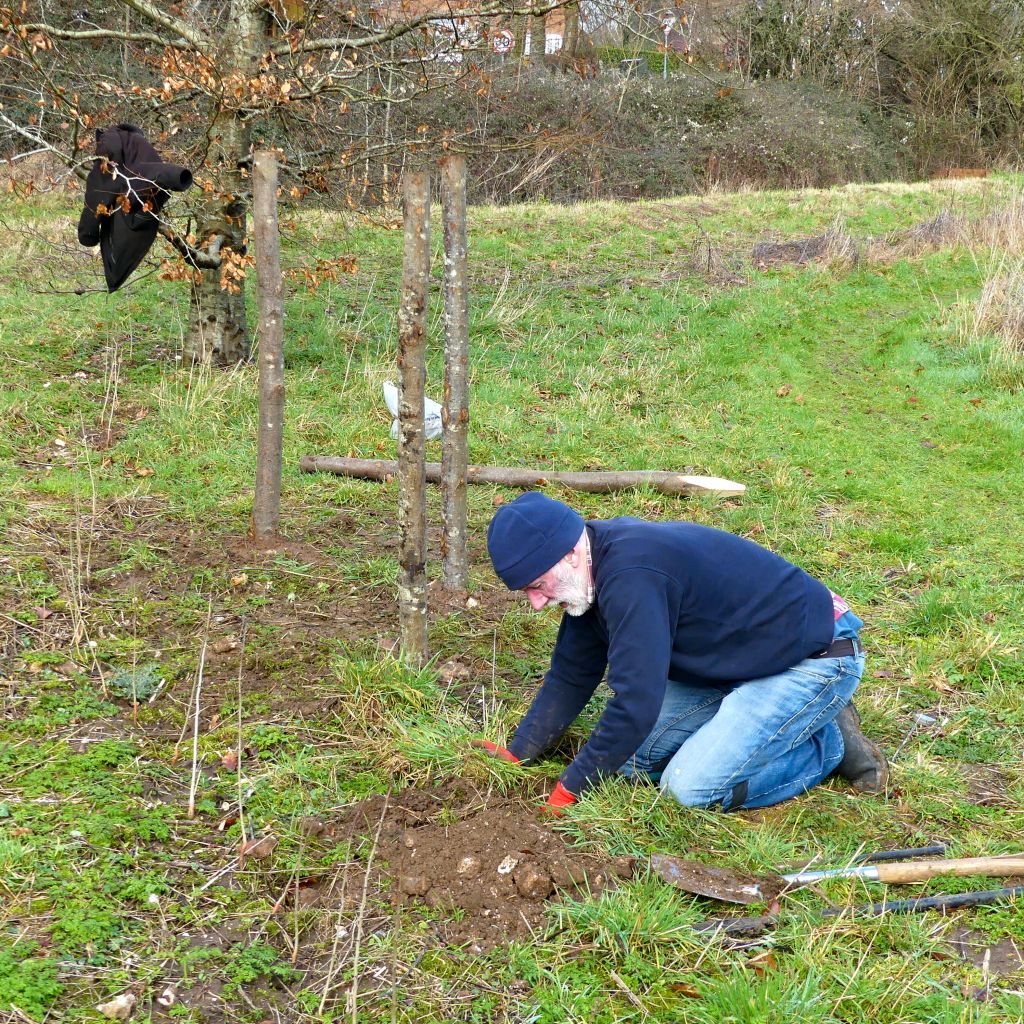
The volunteers first dug a few experimental post holes to find out what the ground was like and discovered that in that place at least there was a fair depth of topsoil before hitting a layer of broken chalk and large flint nodules. Putting in the posts seemed feasible. We bought in 25 untreated and unpeeled chestnut stakes – 6 foot long and pointed allowing two feet of post to be buried in the ground. We started to put in the posts over the last weeks of January and the beginning of February. A heavy chisel-tipped bar was useful to dig down through the flints. We are now ready to infill the first section of the dead hedge with all the material we have accumulated from the hazel coppicing and shrub pruning over winter.
Discover more from Charlton Down Nature Area
Subscribe to get the latest posts sent to your email.

 Charlton Down Nature Area
One thought on “Building a Dead Hedge Habitat – Stage 1”