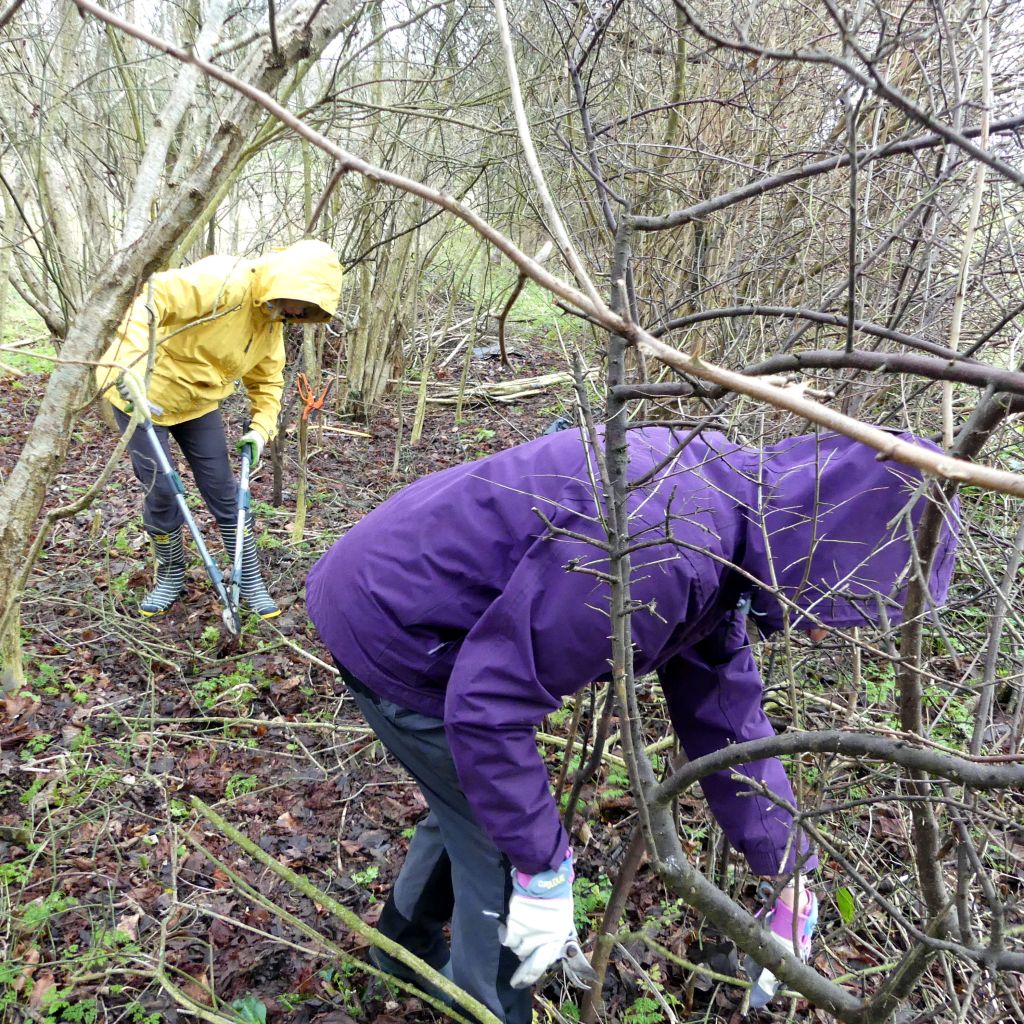
You cannot miss signs of recent activity when you visit the Nature Area right now. While the majority of the area is lying dormant, with last year’s dying vegetation doing a great job of protecting overwintering creatures great and small, we have been taking advantage of the colder months to plant new bulbs, shrubs, and trees. Bearing in mind that our main aim is to increase biodiversity on the site, we have also been giving some attention to the existing shrubs and trees as well. We do not want to create a “gardened” effect but we do have to manage growth to get the best out of plants for wildlife’s sake.
With the blackthorn, the cutting back is very much a case of reducing the spread of a rampant shrub. With the dog roses, which occur in several clumps around the site, they are getting very long and straggly and in the last couple of years have not produced many flowers or hips. So this autumn some of them have been pruned back to encourage new growth. We will prune the others in subsequent years, because we do not want to cut everything back at the same time. It is best to proceed cautiously and monitor the effect of our interventions.
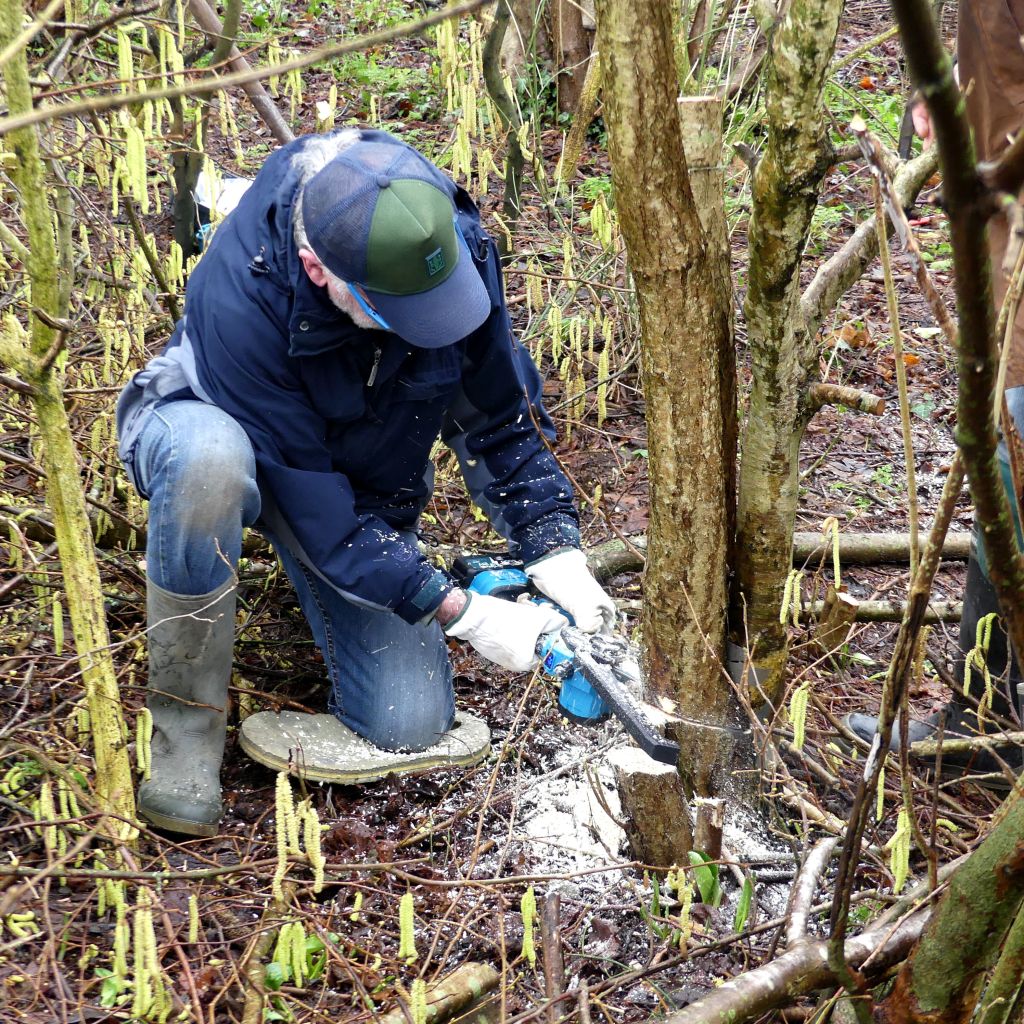
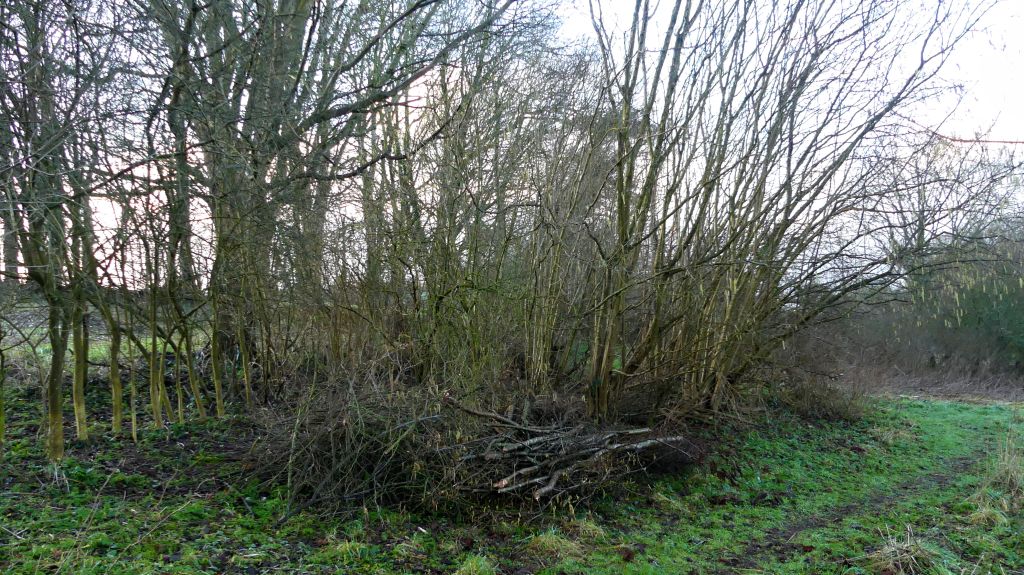
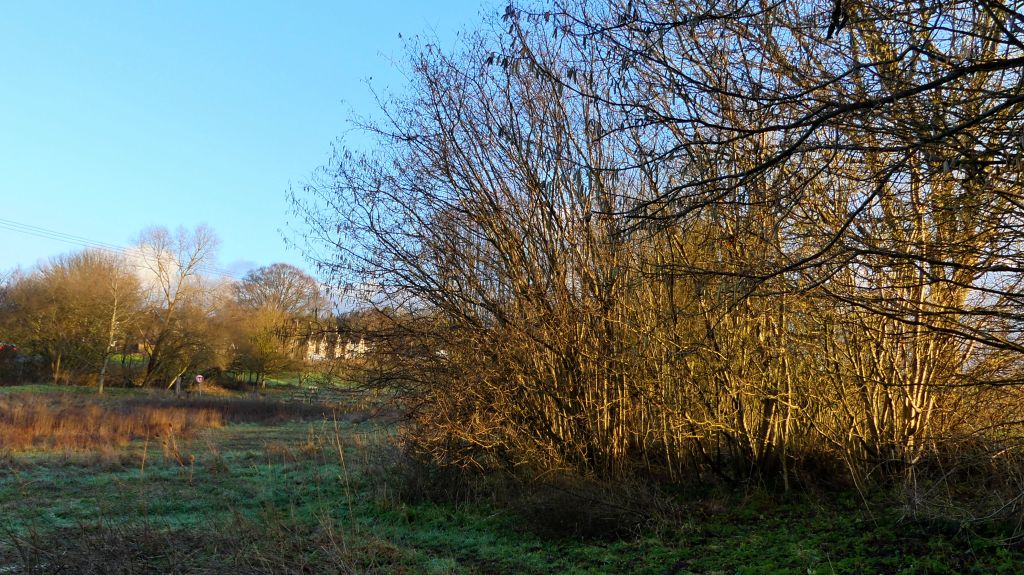
We have now turned our attention to the hazel trees. There are three small groups of hazel spread out along the long border with the neighbouring field. They stand out at this time of the year because of the yellow catkins that they bear. The catkins are the male flowers of the hazel and are now fully open at the end of January and dispersing pollen. Much less obvious are the minute red female flowers. You really do have to look very carefully for them. Only a few millimetres in size and like minute red tassels. they open once the catkins are dispersing pollen. Fertilised flowers produce the hazel nuts seen later in the year – a favourite food of the grey squirrels and maybe even hazel dormice.
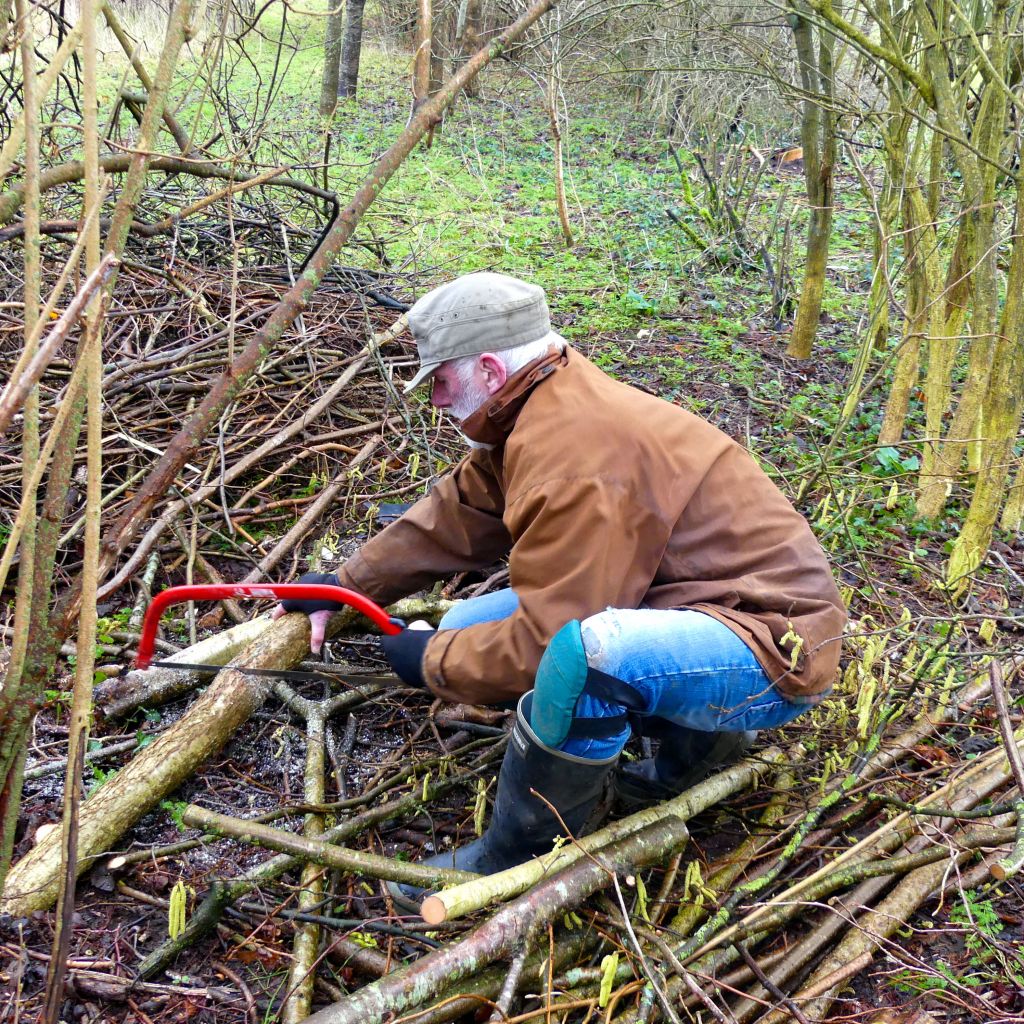
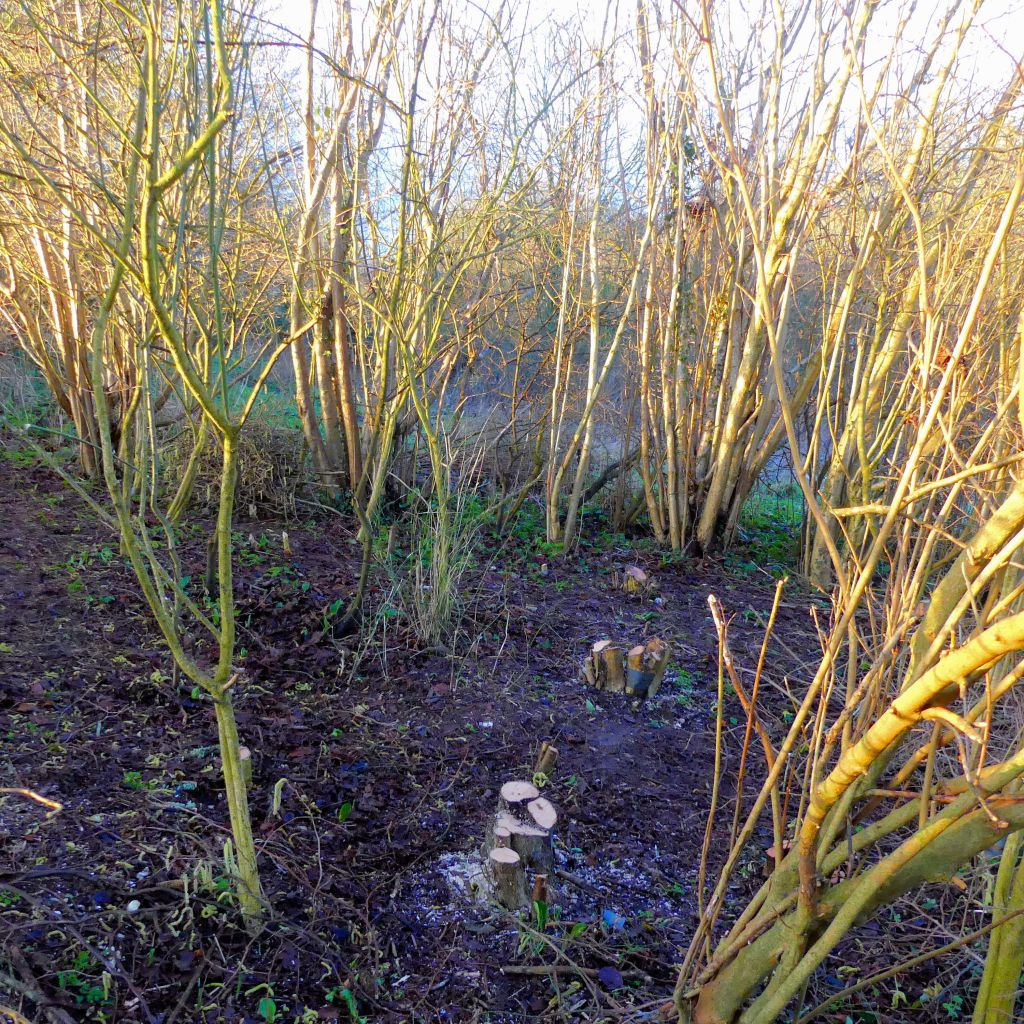
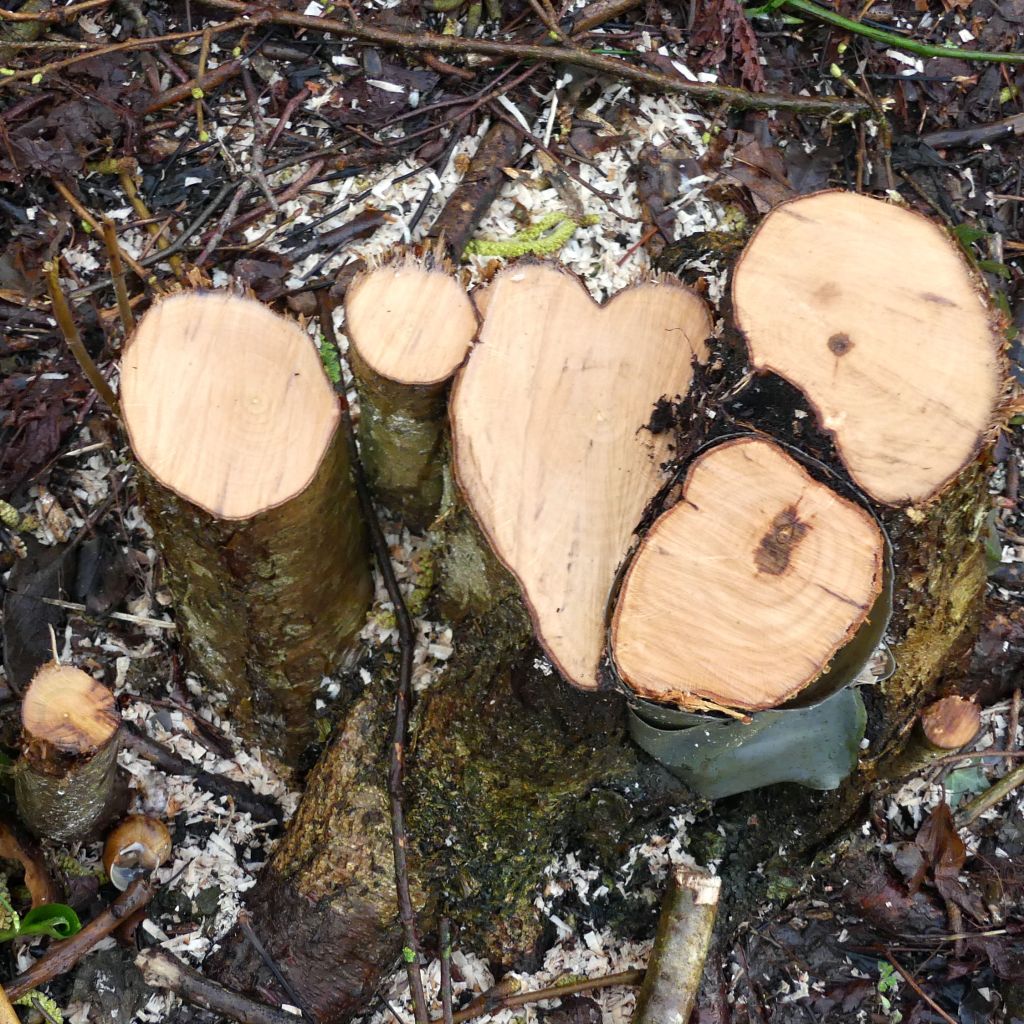
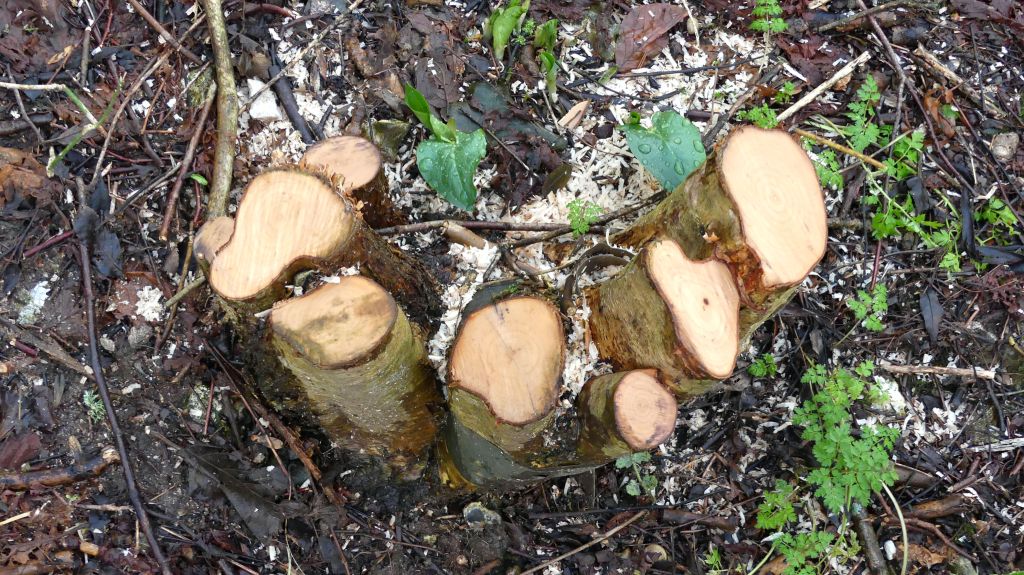
I am guessing that the hazels were planted around 15 years ago, along with the other trees and bushes. They may have been cut once already – with greater and lesser degrees of success. Some of the cut stumps (stools) from previous attempts at coppicing failed to regenerate. The rest are getting quite tall now and not producing as many hazel nuts as they might. So we have experimented by cutting a few almost down to the ground. Traditionally, hazel trees are coppiced every 8 years. Only a few trees are cut each year so that the hazel trees represent different growth stages, each of which attracts the activities of different kinds of wildlife. It is important to protect the new growths that spring up at the bases from being eaten by deer and rabbits. We can do this by constructing protective pyramids of thorny branches around them. It is an excellent way of recycling the blackthorn and bramble cuttings that have been generated from work elsewhere on site. We have already used the technique when we planted a silver birch whip.
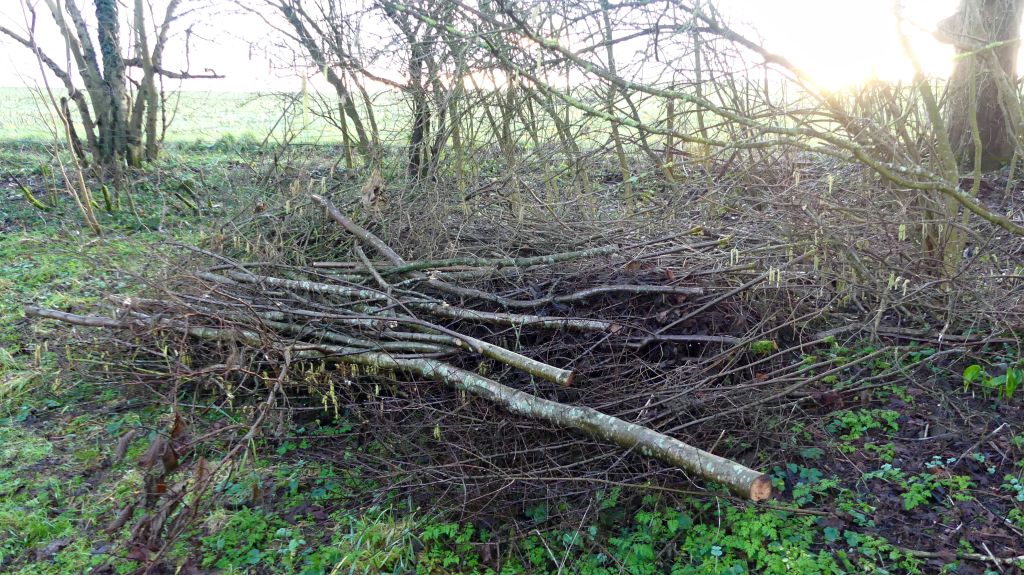
The coppicing of just a few hazels has generated a significant pile of logs, branches and twigs which will all be put to good use when we start to build a length of dead hedging over the next month or so. We have already been gathering a lot of suitable infill material for the dead hedge and this is temporarily lying in piles around the site.
National Trust What is coppicing?
Discover more from Charlton Down Nature Area
Subscribe to get the latest posts sent to your email.

 Charlton Down Nature Area