
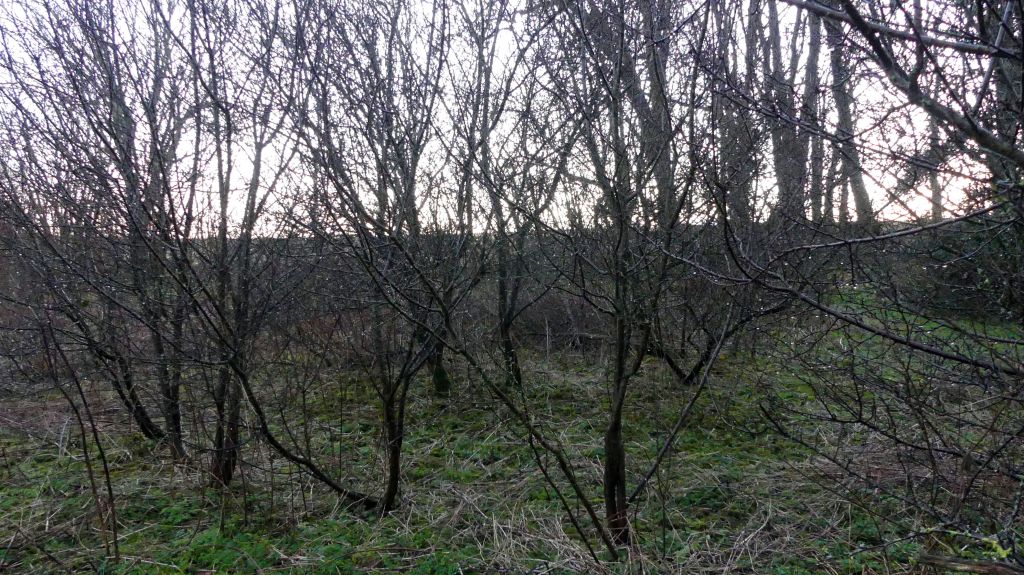


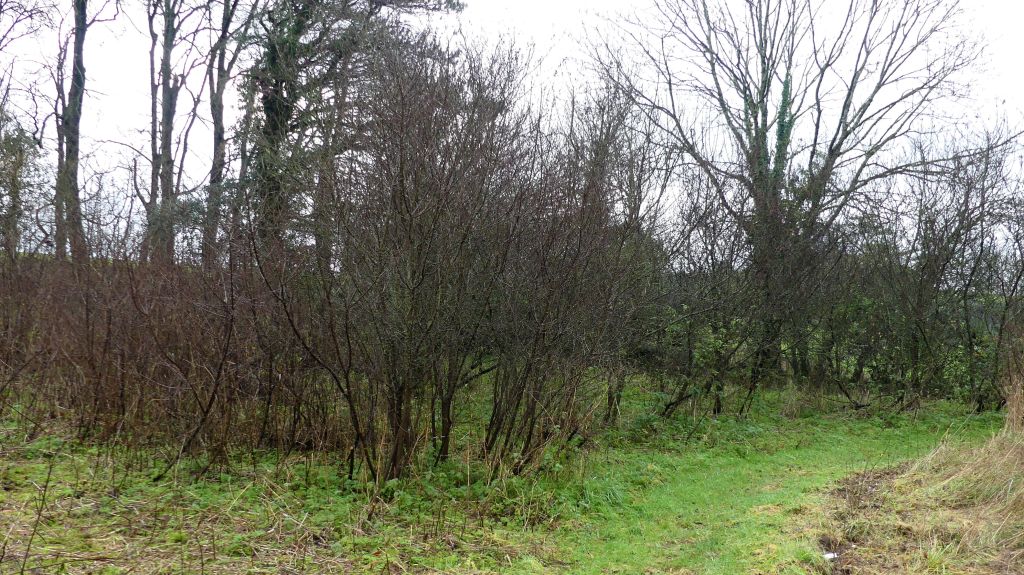
Blackthorn is always be the first shrub to blossom each year. The masses of small white flowers are so beautiful and such a welcome sight. A sign that the winter is nearly over. We have two areas of blackthorn bushes in the Charlton Down Nature Area. And, as much as we love them, they spread so quickly that they would threaten to take the place over if we didn’t do something to control them.
I thought at first that the blackthorn produced new saplings by the germination of fallen fruits or sloes. But this cannot be true because only one patch ever seems to produce berries (sloes) while the other never bears fruit. I conclude that the saplings must arise through ground suckers. Whatever the origin, there are a lot of them appearing each year and they grow very fast.
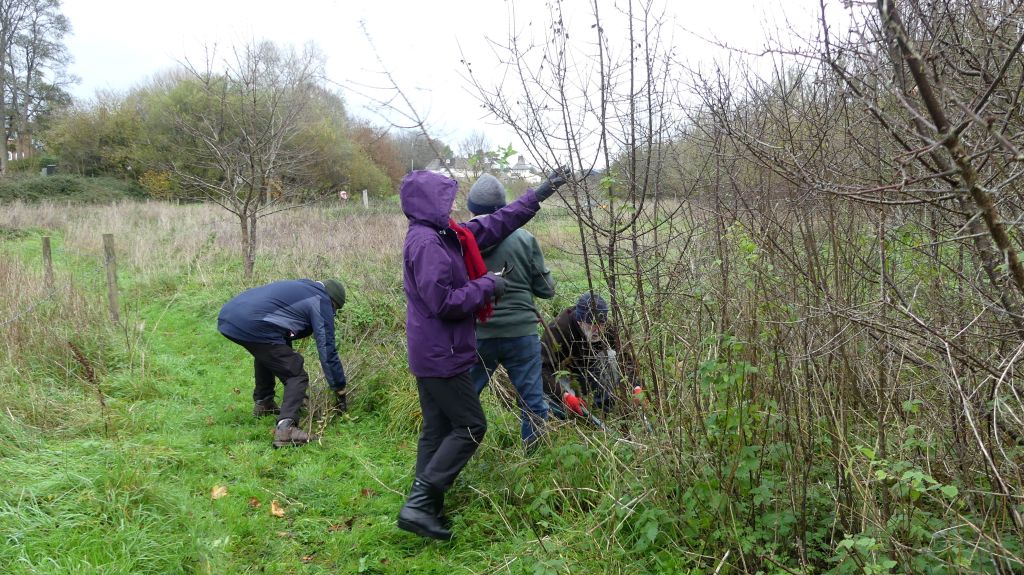
For the past two years we have used secateurs or tree loppers to cut the unwanted saplings down to the ground. This year we removed a slightly larger area of the thicket in the Scrub Zone at the far end of Nature Area. We want to develop more structural variety in that zone by planting a silver birch tree and some gorse bushes. We planted holly, guelder rose, and purging buckthorn last year. It would be good if the new plants thrived so that we would have more flowering and fruiting shrubs, some winter colour from the yellow gorse, and more shape and visual appeal year round. At present, apart from the blackthorn, the area flattens in winter as the dominating grasses, nettles, cow parsley and hogweed die back.
We have saved the blackthorn cuttings with their long sharp spines so that we can arrange them around the newly planted specimens for protection from animals like deer which like to nibble the young shoots. As the branches and stem lie temporarily in heaps at the moment, they are providing shelter for small birds and other wildlife.
Discover more from Charlton Down Nature Area
Subscribe to get the latest posts sent to your email.

 Charlton Down Nature Area
Blackthorn—a beautiful plant that, like bramble, can become a pest because of its quick dispersal via root suckers. Not easy to manage. Are there any plans to produce sloe gin‽
LikeLiked by 1 person
In the Nature Area everything is protected with a “don’t pick, don’t lick” policy and hopefully the fruits are reserved for the wildlife to eat . But sloes for making gin are abundant in hedgerows around the village.
LikeLiked by 1 person