We have always thought that native bluebells would be a wonderful natural addition to the ground beneath the trees around the margins of the Nature Area. They would bring a bit of bright colour at a time of the year when most of the flowers on the site, like hawthorn and blackthorn blossoms, cow parsley, hogweed, and oxeye daisies are white.
Within the grounds of the village of Charlton Down itself most of the bluebells growing in the margins of the public ground at the back of Greenwood House, and in the woodland strip that wraps around Herrison House, are the non-native Spanish cultivated variety (Hyacinthoides hispanica). These are garden escapees from the days when the buildings were part of a large Victorian Hospital.
The native British bluebell (Hyacinthoides non-scripta) is more likely to be found growing wild in untouched scraps of woodland outside the village such as those on the mainly cultivated slopes of Charlton Higher Down less than a mile away. Native bluebells are natural to the area and an acceptable addition to our small wild place. A number of years ago native bluebells “in the green” were planted in the Nature Area, that is the bulbs with the green leaves on after they have flowered in the Spring. This attempt was largely unsuccessful with just the isolated bluebell appearing now and again in the intervening years.
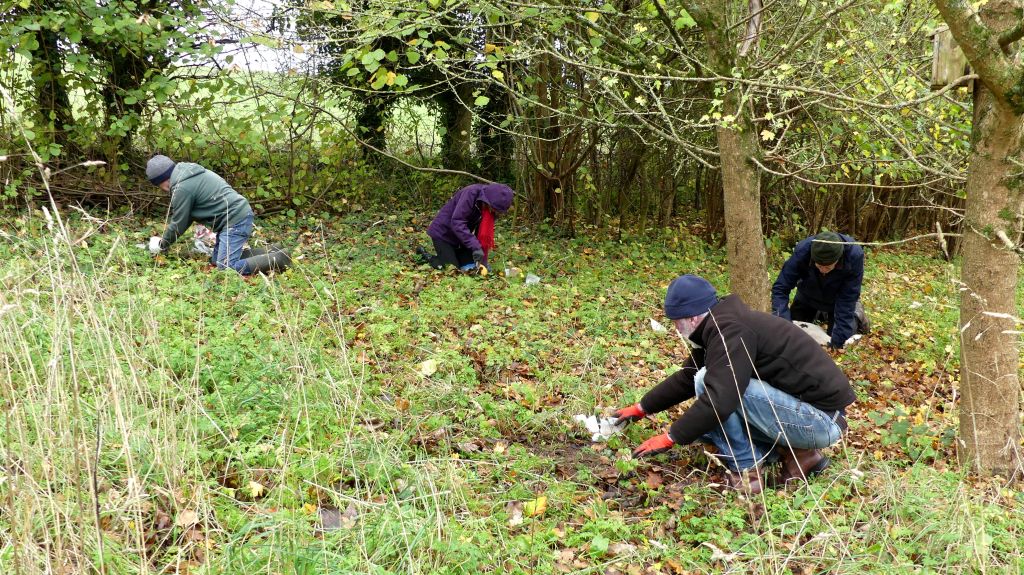
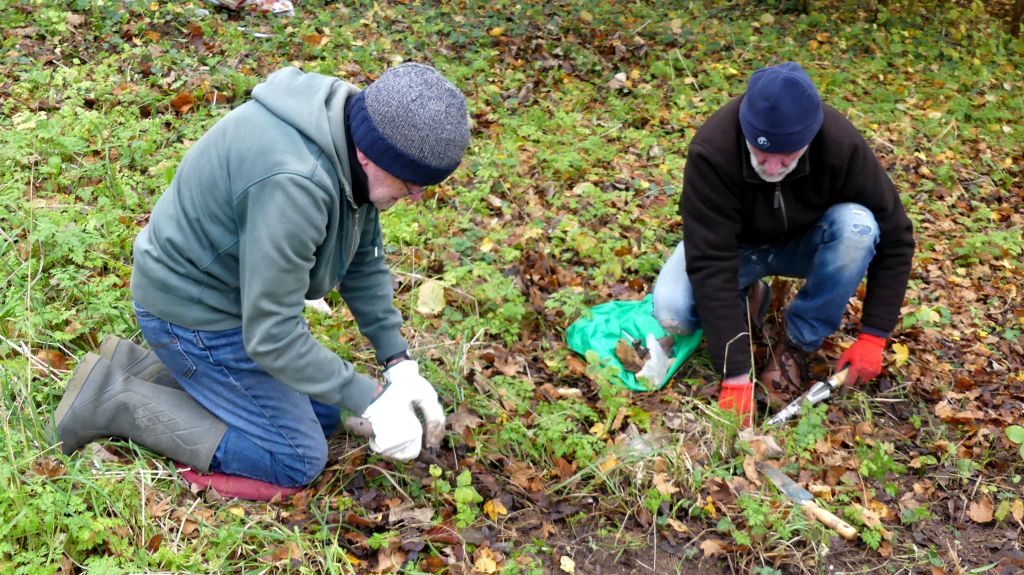
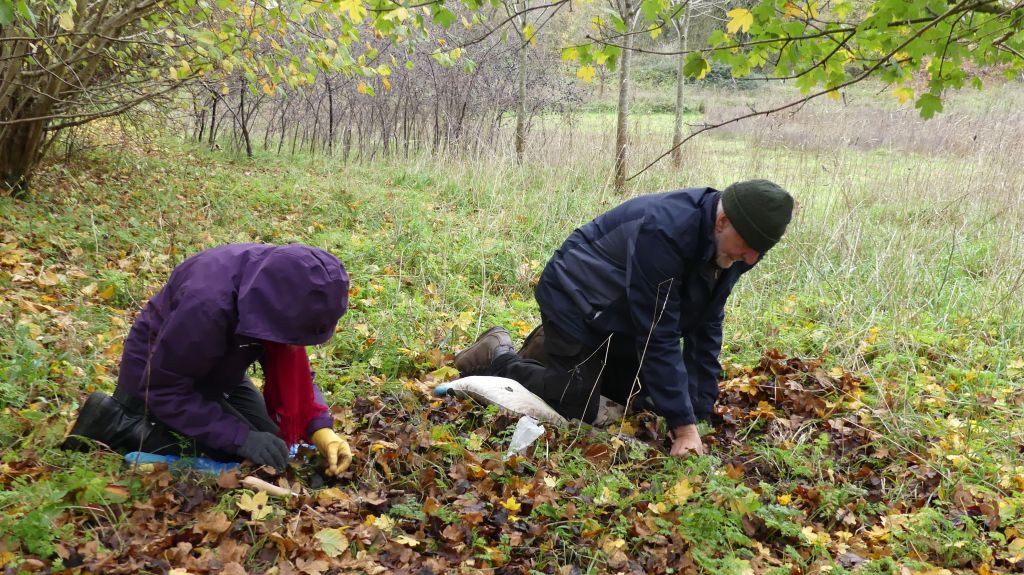
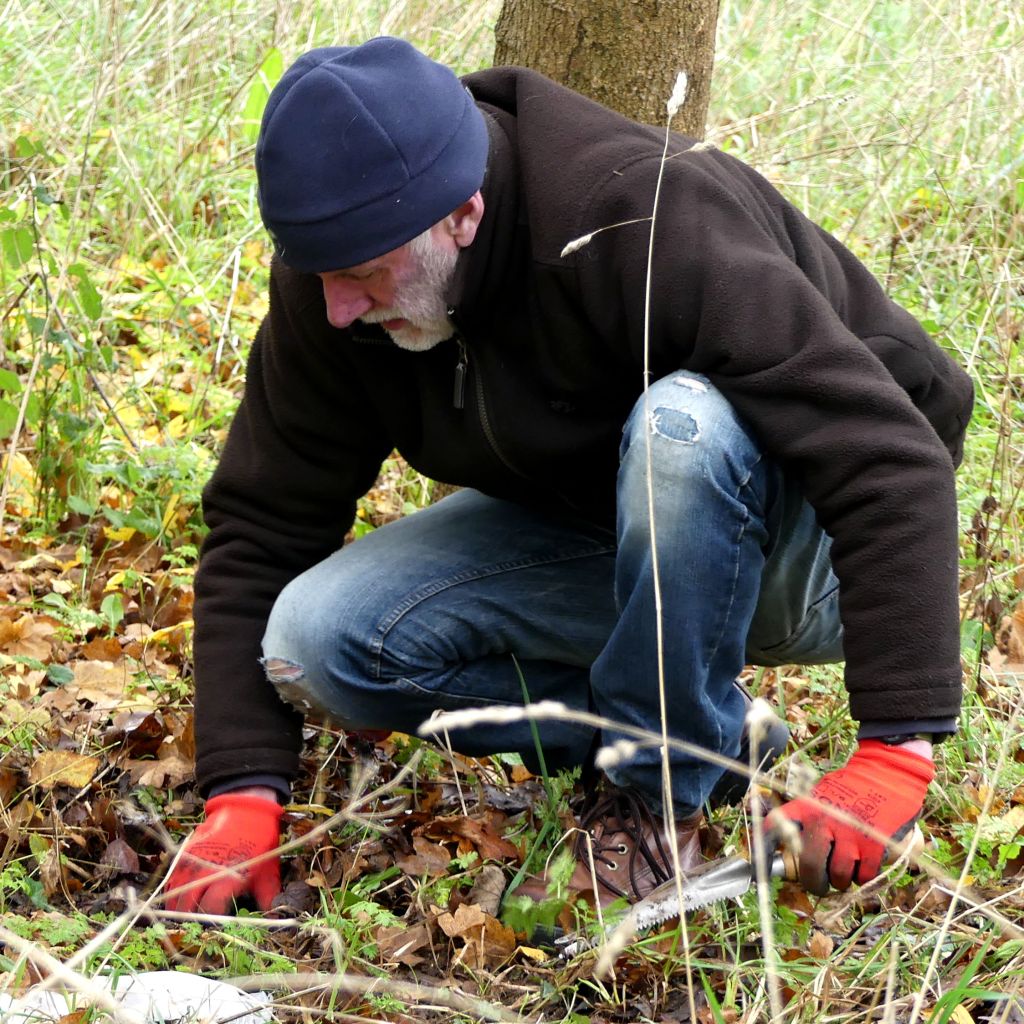
This Autumn we saw a “too good to miss” offer for native bluebell bulbs and decided to have another go at getting them to survive and colonise the Nature Area. Thanks to the efforts of the volunteers on 18 November we planted bulbs beneath a group of Field Maple trees and another batch beneath some Wild Cherry trees. They were planted 4 inches deep and 4 inches apart. I was interested to note that each person had their own favourite tool for the job and their own method of working. We are all wondering if these differences will affect the development of the bulbs more or less favourably, and a bit of friendly competition is being experienced to see which bulbs will best survive and flower in Spring 2026. We hope that grey squirrels do not dig up the bulbs.
Discover more from Charlton Down Nature Area
Subscribe to get the latest posts sent to your email.

 Charlton Down Nature Area
Good luck! Bluebells are such lovely flowers. We planted several bulbs of the British variety last autumn and hope to see them flowering in spring.
LikeLiked by 1 person
Thank you, Markus. Fingers crossed that we both get to see some lovely blue flowers next year.
LikeLiked by 1 person