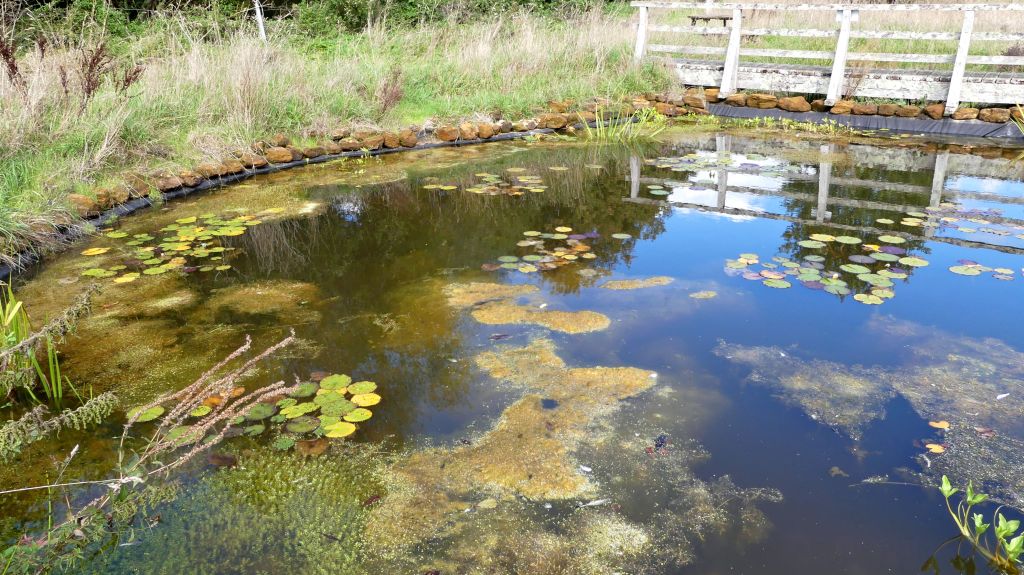

The summer of 2025 was a particularly long hot and dry one in Charlton Down. In fact, The Meteorological Office has declared that last summer was the hottest and driest on record in the UK. This weather naturally had an impact on the Nature Area in the village. Our pond relies on rainfall and there was very little of it. The water level dropped dramatically by evaporation due to the high temperatures. The heat, shallow water, and endless sunshine promoted the growth of filamentous algae in great clumps that threatened to deoxygenate the water, and also gave a growth spurt to the accidentally introduced alien New Zealand Pygmy Weed (Crassula helmsii) doubling its coverage and threatening to outcompete and strangle the other native water plants.
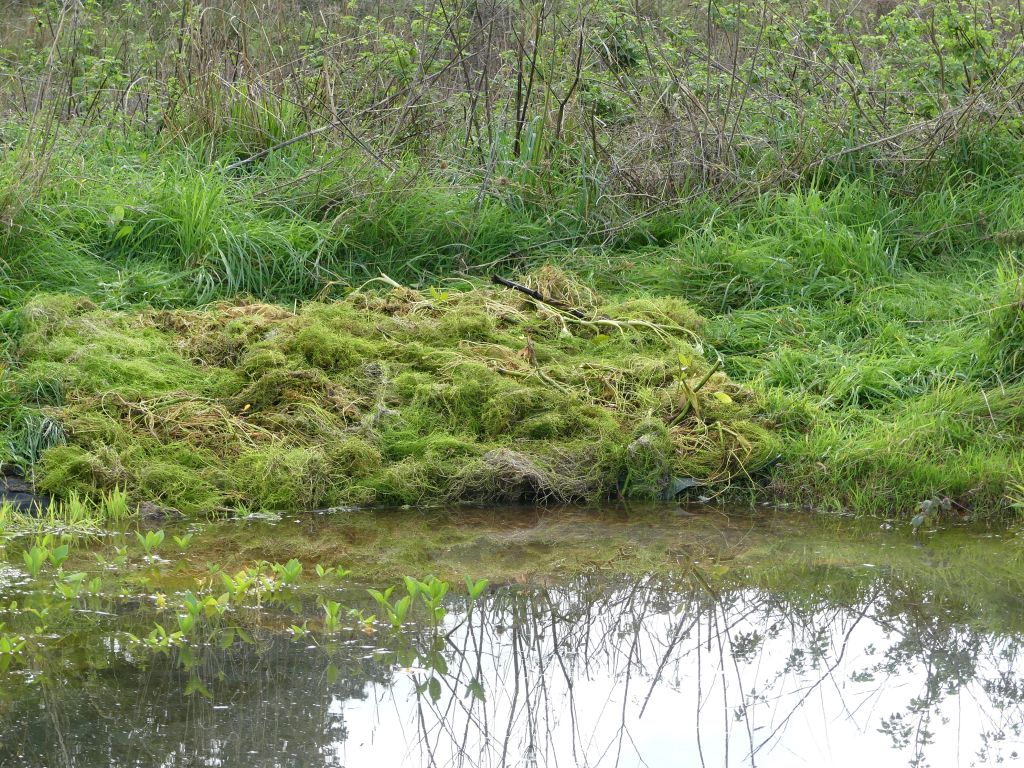
By October the algae was dying back and floating in slimy and unattractive brown mats. The Pygmy Weed was occupying more territory than advisable. Although the situation had not reached dangerous proportions, we decided to manage the problem by removing some of the algae and alien weed. We wanted to avoid entering the water as far as practicable to prevent disturbance to the flora and fauna and their environment. For reasons not fully understood, the numbers and variety of aquatic animals had become dramatically reduced from May 2024 onwards. We suspected that there had been a contamination incident but had only circumstantial evidence of cause. So our approach to clearing vegetation had to be cautious so as not to affect recovery of the animals.
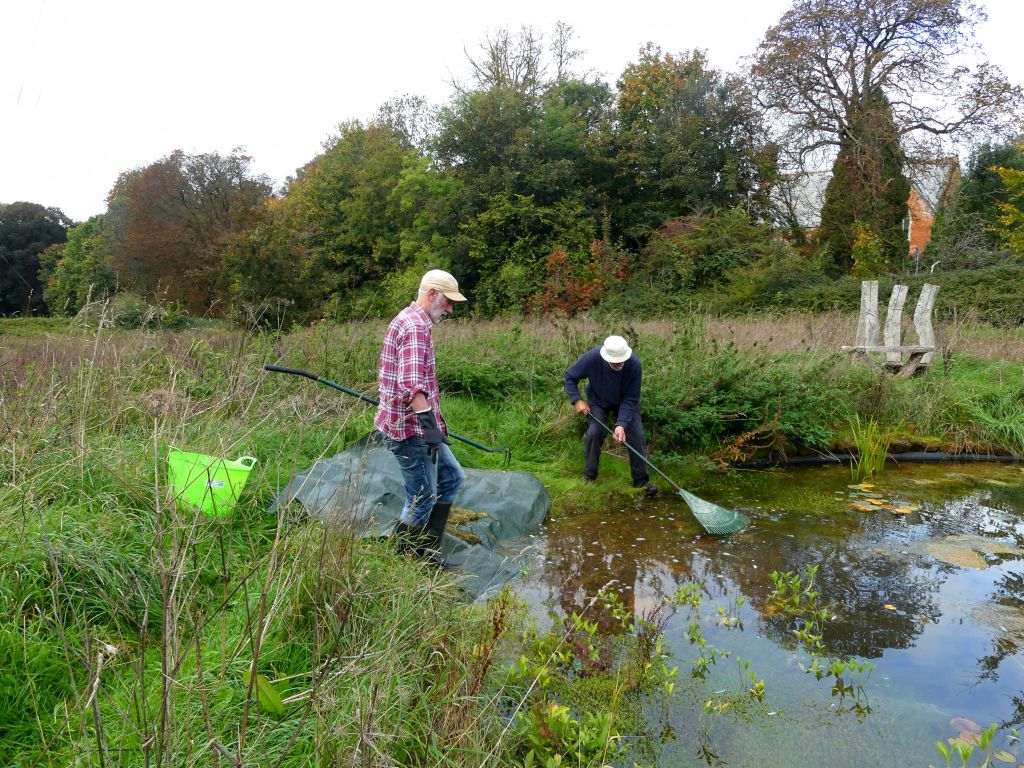
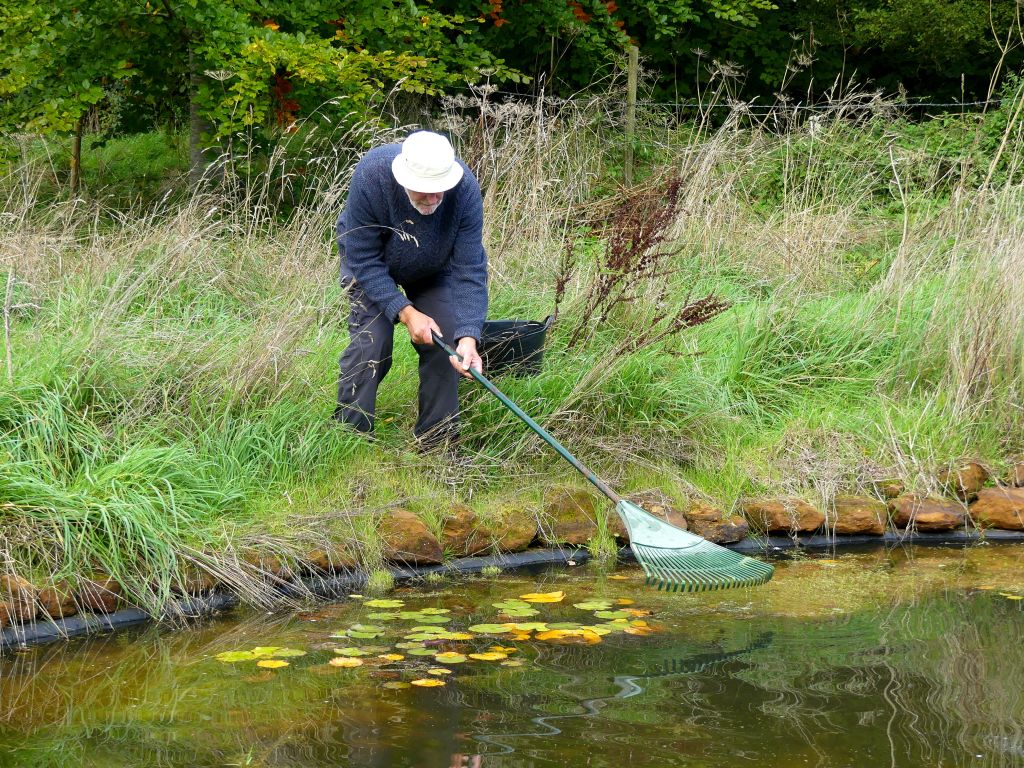
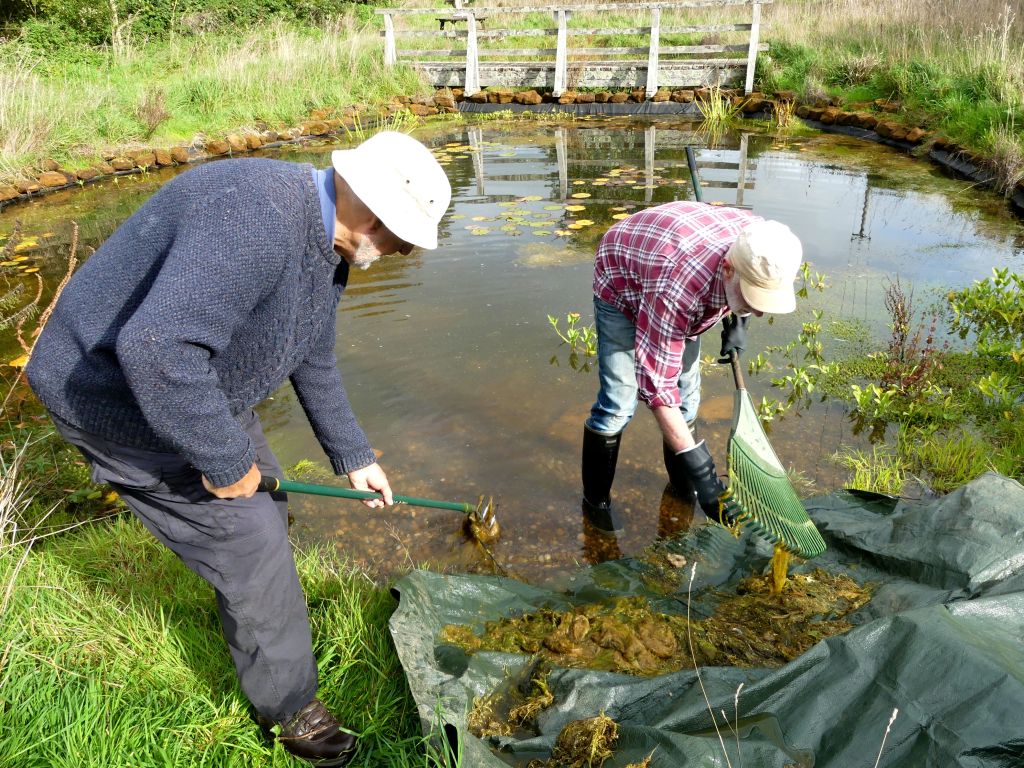
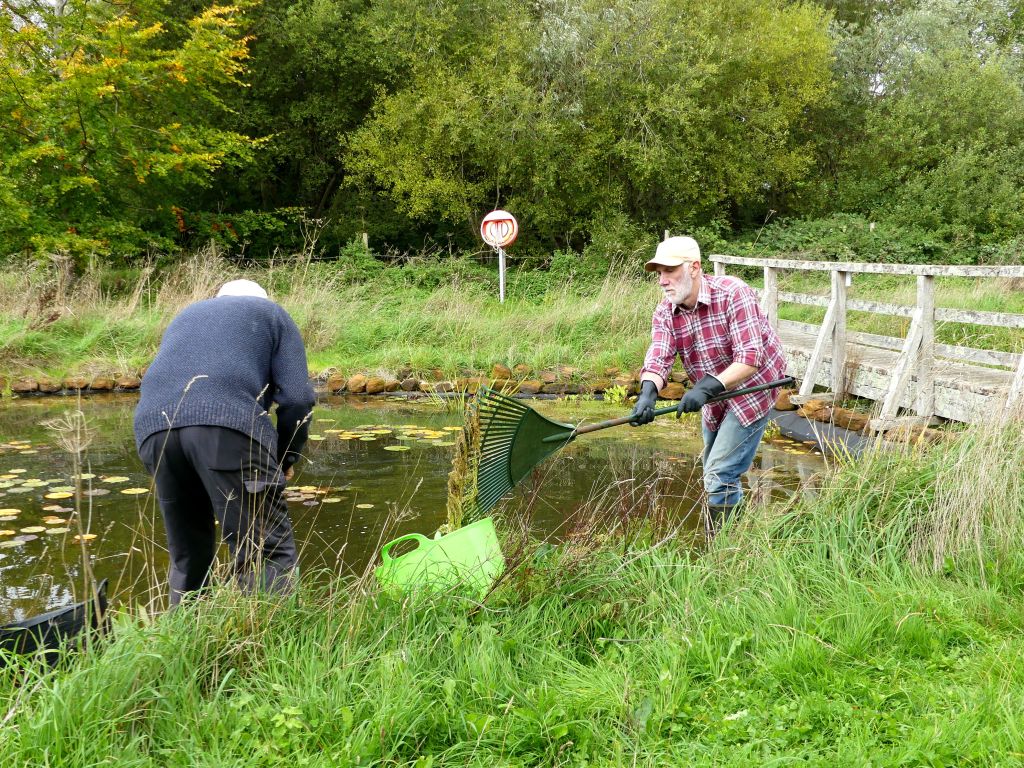
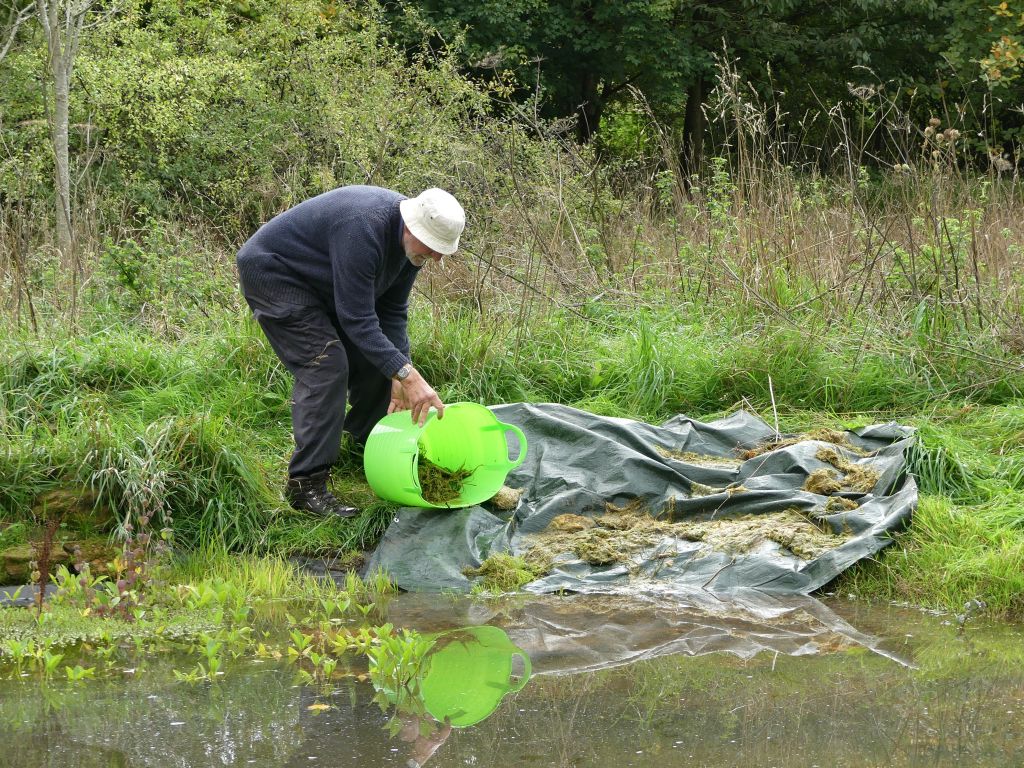
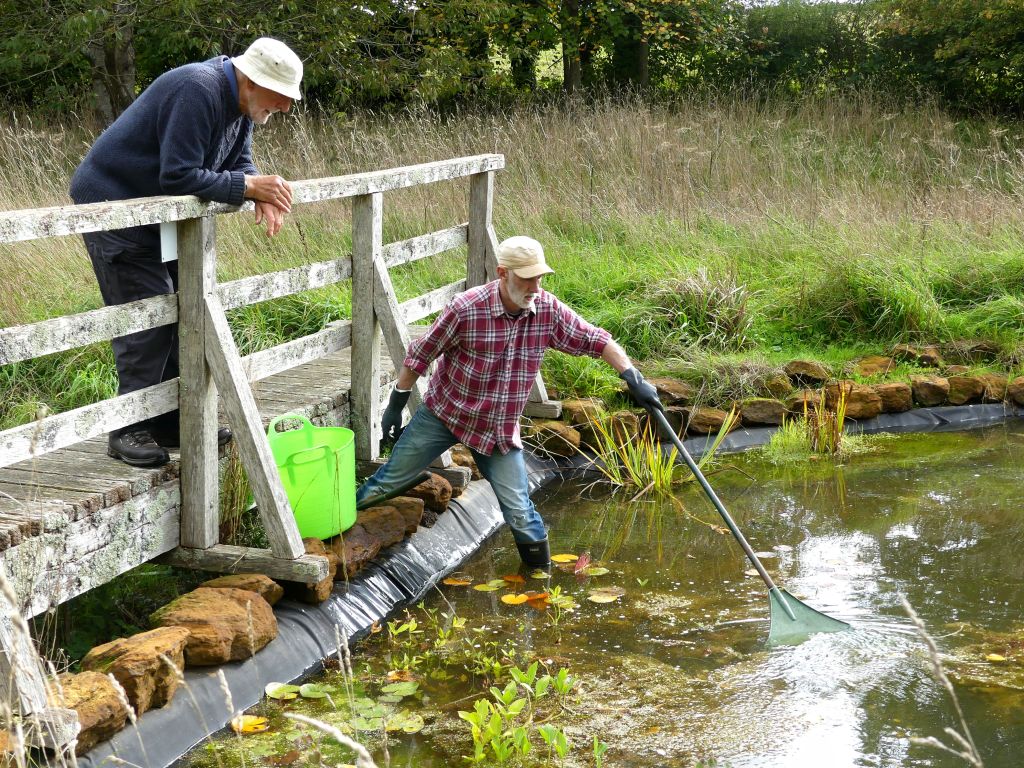
Volunteers used rakes and hoes to reach over the water and drag the unwanted floating weed to the edge. A tarpaulin was stretched out at the shallow and gently sloping end of the pond. The weed was gathered into buckets and spread on the tarpaulin. The water could drain out of the plants and creatures could crawl back to safety. Before the weed was taken to the compost heap, the strands of weed were pulled apart and minutely examined for small animals which were then removed and repatriated.
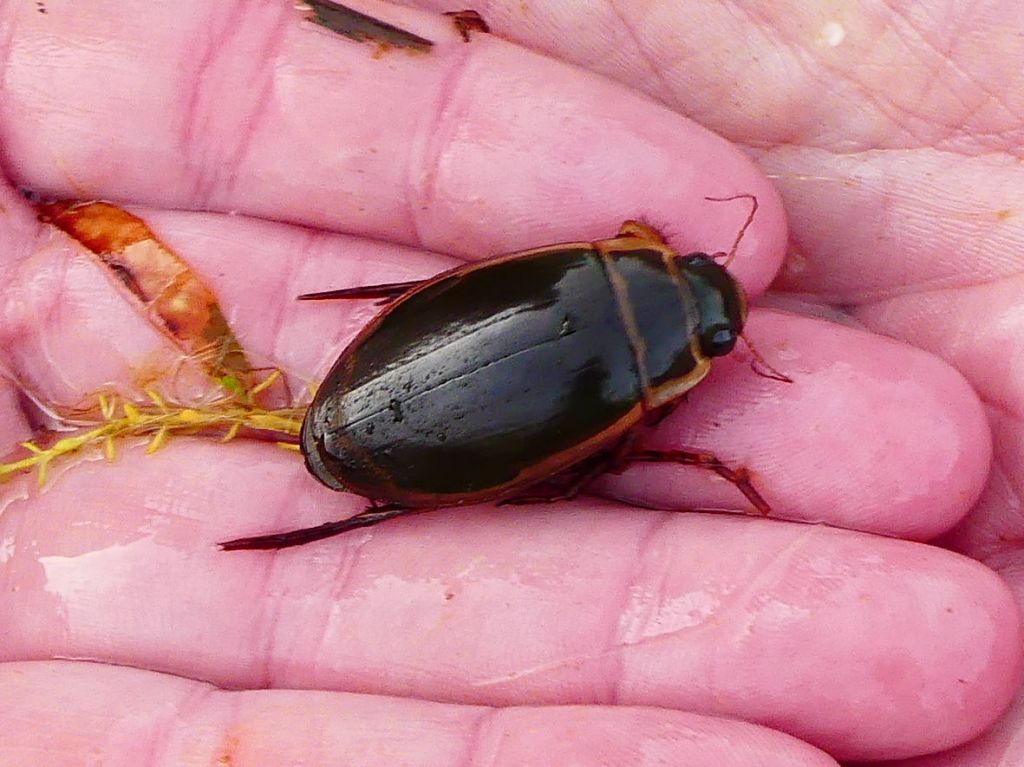
We found a number of very small aquatic invertebrates including snails and freshwater shrimps in the plants. This was very heartening as an indication that a recovery process was taking place in the pond after the incident earlier in the year. Previously, for example, the Lymnaeid and Planorbid snails – once numerous – had seemed to completely disappear. But here was evidence of a new generation developing. We were also lucky enough to see a beautiful Great Diving Beetle.
Only a portion of the unwanted weed was removed on this occasion because we could see that it was actually performing an important function by providing shelter to many immature stages animals. It will additionally serve as suitable substrate on which frogs, toads, and newts can spawn in early spring. We will keep an eye on the situation this year before deciding to remove any more. If we are fortunate, some of the native British aquatic plants transferred from the old pond, and the new ones introduced last year, may become more established and take over dominance in the pond.
Discover more from Charlton Down Nature Area
Subscribe to get the latest posts sent to your email.

 Charlton Down Nature Area
Great job. You acted so carefully and thoughtfully. I like your idea to use a tarpaulin the way you did here. Interesting to learn that even an invasive alien species can perform an important function. Wishing you a happy and healthy new year–with a summer not as hot and dry as the last one.
LikeLiked by 1 person
Thank you for the encouragement, Markus. We do our best and learn what to do as we go along. It helps that one or two of us has some relevant knowledge or experience from earlier working life but overall it is a steep learning curve and a great responsibility.
LikeLiked by 1 person