

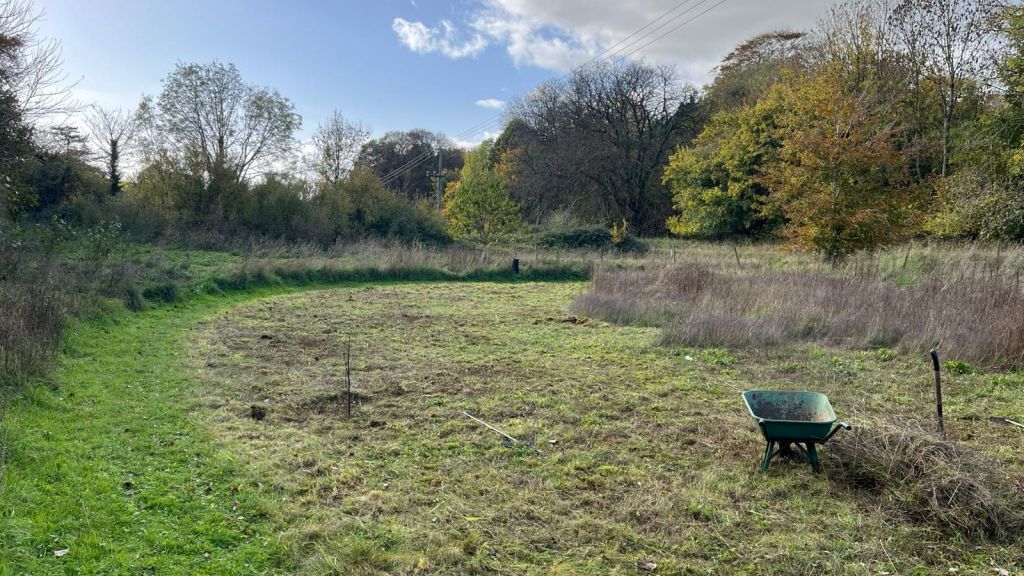

Clearing the cuttings from scything
We had no idea what hard work it would be to follow on from the scything activity of 21st October. On the scything day, the cut dried vegetation had been raked up into rows across the portion of the wildflower zone that had been cut down. These arisings had been left for a week to allow small creatures to relocate to safer areas if they could.
It took three mornings’ work (28th and 30th October, and 2 November) to clear away the cuttings, rake them up and transfer them to a heap beneath the trees in one corner of the Nature Area. There was already a heap there. We refer to it as a compost heap but in fact it will never be spread around the site to fertilise the ground. It serves as a another type of habitat, a refuge for wildlife, like the brash and log piles located elsewhere among the trees.
Once the loose material had been removed, we started to scarify the ground to clear some barer areas to accept the new seeds. We found that there were many moss-covered patches between the plants that could be raked up and removed, all the while being careful not to disturb the wasp nest which we had painfully discovered during the scything.
We chose a Native British general purpose wildflower seed mix suitable for the most soil types supplied by Meadowmania. This contained 100% wildflower seeds with no grass and including yellow rattle which helps to reduce the vigour of the taller-growing existing grasses by feeding off their roots. The 23 species of flowers were a mixture of annual and perennial species that would flower from May to September.
The varieties of flowers included agrimony, wild clary, lesser knapweed, greater knapweed, wild foxglove, teasel, musk mallow, purple loosestrife, wild marjoram, meadow cranesbill, field scabious, small scabious, salad burnet, ragged robin, sainfoin, selfheal, birds foot trefoil, kidney vetch, ribwort plantain, corn poppy, white clover, red clover, purple cornflower, oxeye daisy, vipers bugloss, yarrow, yellow rattle.
Many of these flower varieties were still surviving in our wildflower zone from previous seedings, but in very small numbers because of the increasing predominance of grasses and several of the more robust flower species. The seeds are mostly vey small, and only 1.5 to 3 grams is needed for each square metre, so the seeds were mixed with out-of-date flour before scattering so that we could see where the ground had been seeded, before being trodden into the damp earth to ensure contact between the soil and the seeds.
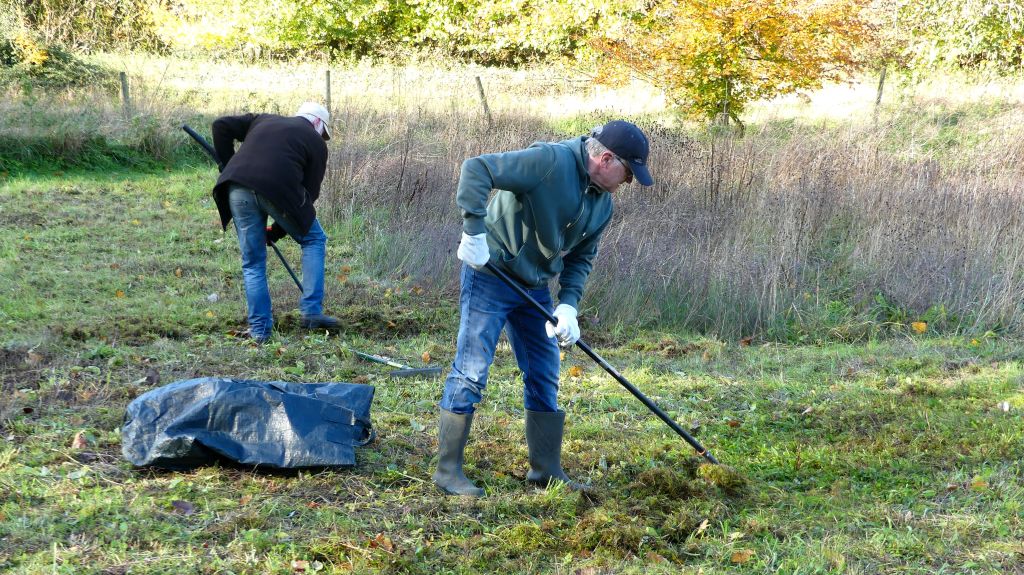
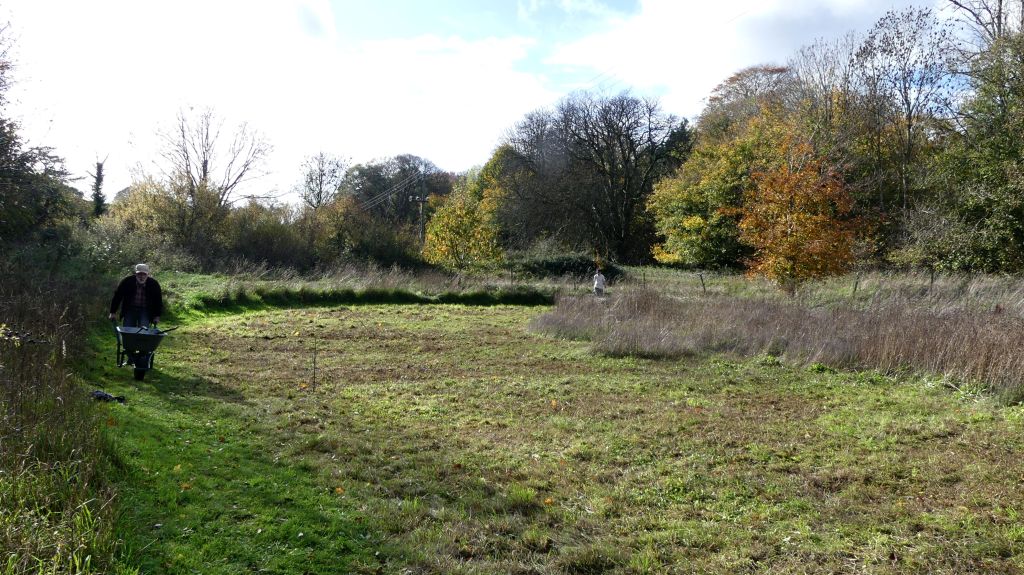
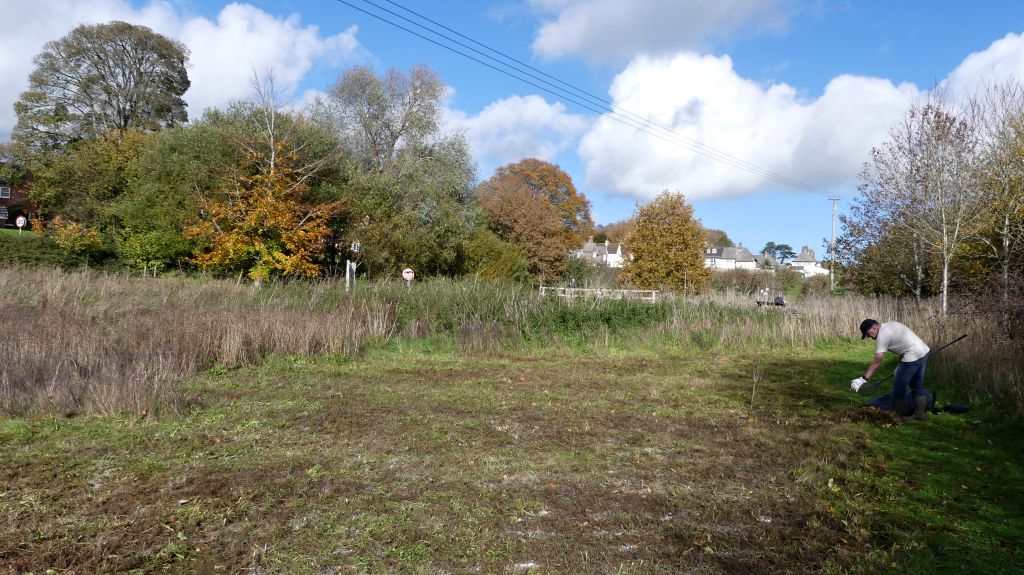
Scarifying and seeding the prepared wildflower site
Discover more from Charlton Down Nature Area
Subscribe to get the latest posts sent to your email.

 Charlton Down Nature Area